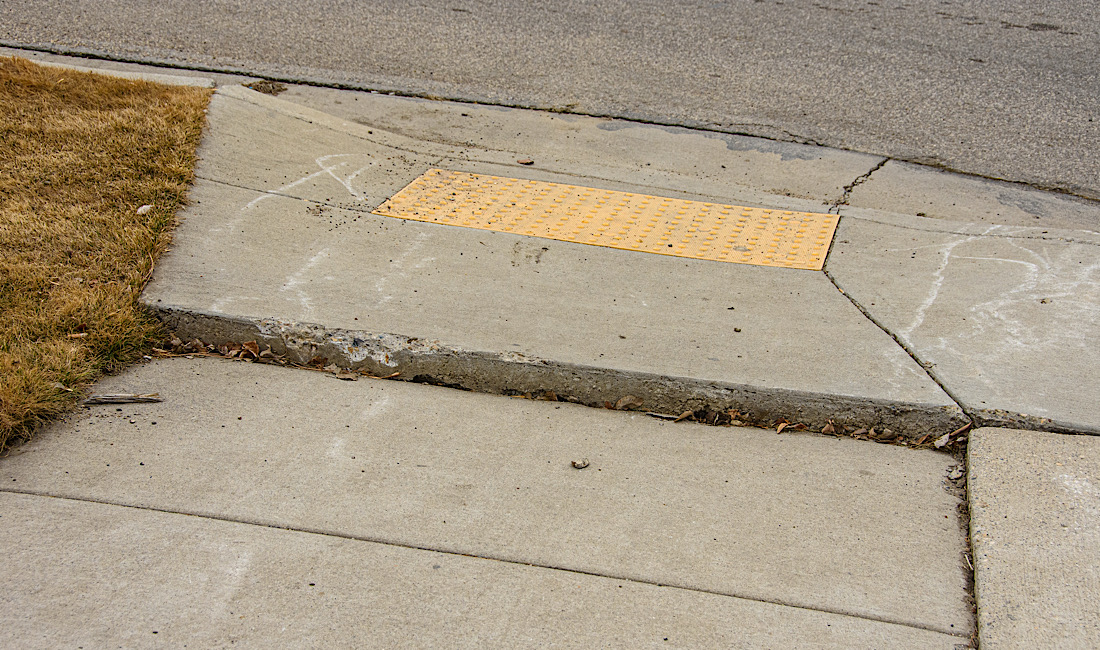
Most HOA boards do not discover their concrete problem. They inherit it. Somebody trips near building C, an owner emails the manager, and suddenly the board is looking at four miles of sidewalk with no idea how many other lips are out there or what it would cost to deal with all of them.
That is a program problem, not a repair problem. The repair itself is straightforward and Idaho Concrete Lifting does it every week across Treasure Valley communities. The hard part for a board is turning an unbounded liability into a line item with a number next to it, defensible enough to survive a budget meeting. This post is about that process: how to inventory hazards across a community, how to phase the work across one or more budget cycles, and how to present it so it gets approved.
We are not going to re-argue the liability case here. If you need the legal and insurance framing to bring to your board, read what property owners should know about trip hazards and liability first. Assume from here that your board already agrees something has to be done.
Start with an inventory, not a quote
Boards routinely call for a quote before anyone has walked the property. The result is a number attached to an unknown scope, which is exactly the kind of proposal that gets tabled.
Walk it instead. One person, a measuring tape, a phone camera and a property map. Every displacement gets four pieces of data:
- Location tied to a building number, unit range or landmark, so a repair crew and a board member can both find it
- Vertical displacement in eighths or quarters of an inch at the highest point of the lip
- A photo with something for scale in frame
- Context, meaning what the panel serves: a mailbox cluster, a building entry, a pool gate, a path to guest parking
That last item is what separates a useful inventory from a list. A half-inch lip in front of the mail kiosk that every resident visits daily is a materially different risk from a three-quarter-inch lip on a back path to a maintenance shed.
A full walk on a mid-sized community usually takes a few hours. Do it once, and the board owns a document it can reuse for years rather than starting over every time the topic resurfaces.
Sorting what you found into tiers
Once the list exists, group it. Boards make decisions far more easily against three tiers than against ninety individual entries.
| Tier | What belongs in it | Timing |
|---|---|---|
| Immediate | Displacements at high traffic points, anything on a required accessible route, anything already the subject of a resident complaint or an incident report | Current budget year, do not defer |
| Scheduled | Real but lower traffic displacements, panels that have visibly moved over the last year, areas where the trend matters more than the current measurement | Next cycle, priced and calendared now |
| Monitor | Minor lips, isolated cracking with no elevation change, hairline separation at joints | Re-measure at the annual walk |
Two notes on tiering. First, any displacement that is the subject of a written complaint moves to immediate regardless of measurement, because documented notice changes the board’s position if an injury follows. Second, movement trend beats absolute height. A panel that went from nothing to three-eighths of an inch in one year has a void under it and will keep going. A panel that has been a half inch since the property was built has probably stopped.
For the general safety framing to include in a board packet, our post on how quickly uneven concrete can be fixed is a short, shareable piece that answers the question boards ask most: how disruptive is this going to be?
Common area or owner responsibility?
Settle this before pricing anything, because it determines what the association is actually buying.
In most Idaho communities, the association maintains sidewalks, walkways, and the paths connecting common facilities, while driveways, patios and private entry walks fall to the owner. The complications show up at the edges: the walk from a public sidewalk to an individual unit door, shared driveway aprons in cluster developments, and patios that sit on common area soil. Your CC and Rs govern, and they do not all read the same way.
Where the boundary is genuinely unclear, boards commonly take one of two approaches. Some repair everything within a defined zone and treat consistency as the point, on the reasoning that an injury on an ambiguous panel will be argued against the association anyway. Others repair association assets only and offer owners the option to add their own slabs to the same mobilization at their own cost. The second approach is popular because it costs the association nothing extra and owners get a better price than they would calling independently.
Phasing the work across budget cycles
Very few associations fund a full community repair in one year, and very few need to. Phasing works because concrete settlement is not uniform. Some areas are stable, some are actively moving, and the board’s job is to fund the moving parts first.
A workable three-year structure
- Year one: every immediate tier item, plus the worst cluster in the scheduled tier. This is the year the association’s exposure actually drops, and it is the easiest year to justify.
- Year two: the remainder of the scheduled tier, usually organized by geography so crews work one section of the community at a time.
- Year three: monitor tier items that moved, plus joint and crack sealing across previously repaired areas to slow water infiltration.
Two things make phasing easier to sell. Mobilization efficiency is one: grouping repairs geographically means fewer setups and better pricing per panel than scattering the same work across the map. The other is that lifting is not a temporary fix that resets the clock. A panel lifted in year one is not on the year three list.
Presenting it to the board
A board member is not evaluating concrete. They are deciding whether to defend a line item to the membership at the annual meeting. Give them what that requires.
- One page, three tiers, one number each. The detailed inventory goes in an appendix, not the main page.
- Photos of the worst five. Nothing moves a budget discussion faster than a picture of the lip outside building C with a tape measure across it.
- Cost of the alternative. Compare the repair figure against what a single fall claim and the subsequent insurance treatment tends to run. Do not invent a number. Ask your insurance agent for the association’s own loss history and deductible.
- Reserve study alignment. If concrete appears in the reserve study, cite the component and its remaining useful life. If it does not appear, that is worth flagging as its own finding.
- A resident-facing sentence. Boards are asked, “What did you do with our dues” every spring. “We repaired 46 trip hazards across the community and photographed every one” is a good answer.
What community-wide repair actually looks like on site
The concern a board raises after cost is disruption, and it is a fair one. Polyurethane lifting is well suited to occupied communities for a few practical reasons.
Access is small. A truck parks nearby and the work happens through penetrations about the diameter of a pencil rather than through demolition. There is no saw cutting, no dumpster, no concrete truck blocking a fire lane. Individual panels are typically finished in well under an hour, and the material reaches walkable strength within minutes, so a walkway that is closed at nine is generally open before lunch. Because nothing is torn out, landscaping, irrigation lines and sprinkler heads adjacent to the walk stay where they are, which matters in communities where the association also pays for the lawn.
For scheduling, most associations post notice at affected buildings two or three days ahead and work one section per day. Residents lose access to a stretch of walk for part of a morning, not for a week.
One seasonal note worth raising at the fall meeting: communities with an older resident population have a narrower tolerance for ice on uneven walks, and the two hazards compound. Our piece on preventing falls before the ice arrives is useful context if your community skews that way.
Frequently asked questions
How do we know how many trip hazards our community has?
Walk it and measure. Most associations are surprised in both directions: fewer severe hazards than feared, more minor displacements than expected.
What displacement height counts as a trip hazard?
Guidance varies by jurisdiction and by which standard is being applied, so verify locally rather than relying on a single number. In practice, boards should treat any lip a resident can catch a shoe on as actionable, and should weight high traffic locations more heavily than measurement alone.
Can an HOA phase concrete repairs over multiple budget years?
Yes, and most do. Fund the actively moving and high traffic hazards first, then work through the rest geographically. Document the plan so the phasing looks like a program rather than a deferral.
Is lifting cheaper than replacing panels?
In most cases it is substantially less per panel, and the gap widens at scale because there is no demolition, no disposal and no landscape restoration. The exception is concrete that has failed structurally, which should be replaced.
How disruptive is this for residents?
Low. Expect a partial-morning closure of the section being worked, no heavy demolition and no extended fencing. Repaired walkways are typically usable the same day.
Who is responsible when the sidewalk runs to an owner’s front door?
Your CC and Rs decide it. Resolve the question in writing before the repair, not after a claim.
Turn the list into a budget number
If your board is heading into budget season with concrete on the agenda and no scope behind it, the missing piece is a walk of the property and a tiered, priced inventory the board can vote on. Idaho Concrete Lifting works with community associations and property managers across Idaho and Eastern Oregon, and our commercial concrete lifting services are built around this kind of multi-phase work. You can also review completed projects in our work before bringing it to the board. Contact us to schedule a property walk while the budget conversation is still open.