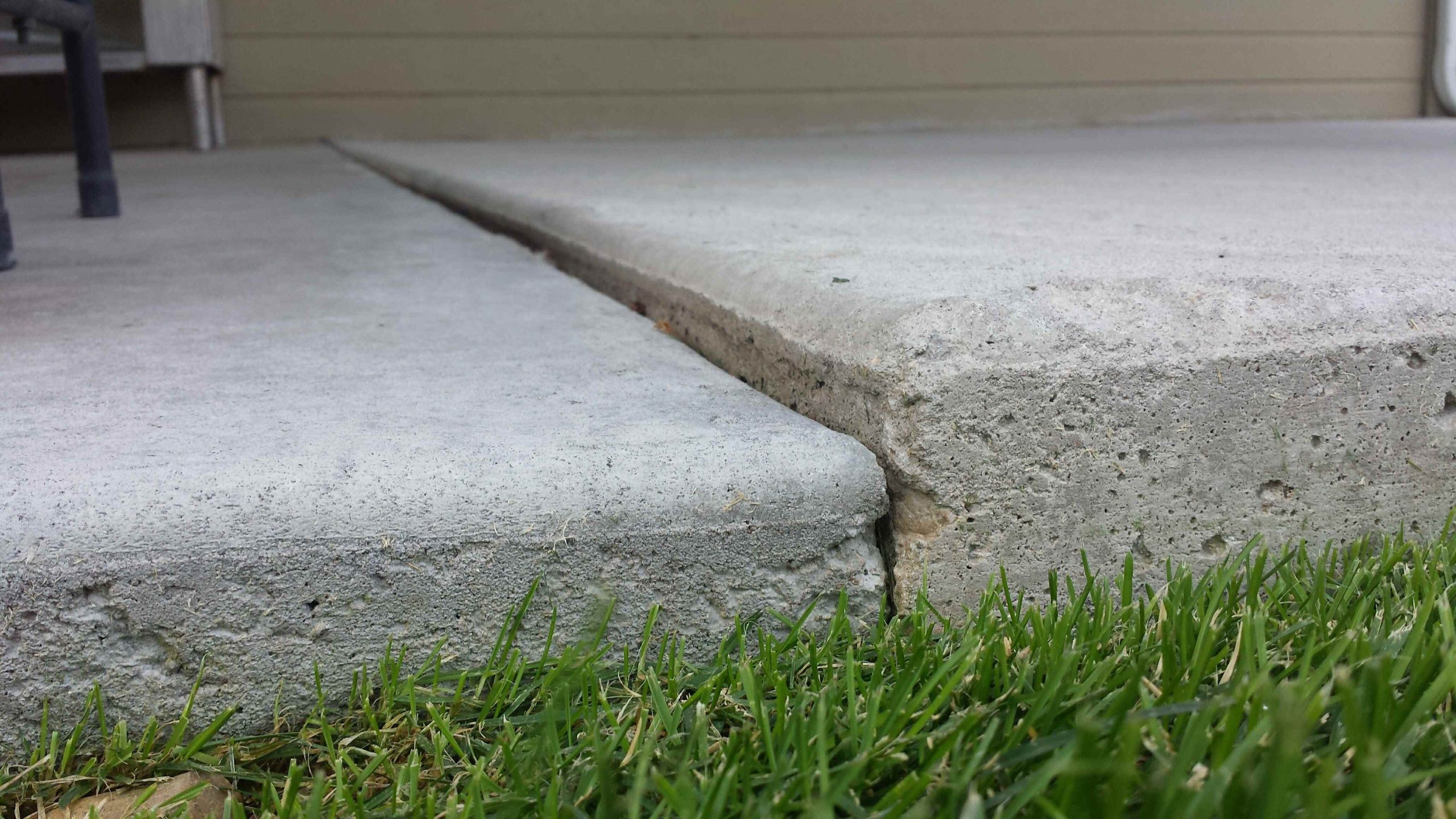
A void is empty space between the underside of a concrete slab and the soil that is supposed to be holding it up. It is the condition that exists before a slab visibly sinks, which is what makes it worth understanding. By the time a driveway has dropped two inches, the void has been there for years.
The useful thing about voids is that they are detectable early, often with nothing more than a hammer and ten minutes. Below is how they form, what you can check yourself, what happens if you leave one alone, and what the repair options actually are. Idaho Concrete Lifting works on this across Boise, Nampa, Caldwell, Meridian and the surrounding valley, and the pattern repeats often enough to be predictable.
What a void actually is
Concrete slabs are not structural bridges. A residential driveway, patio, sidewalk or garage floor is designed to be supported continuously along its entire underside by compacted soil or gravel base. The concrete distributes load. The ground carries it.
Remove the ground from under part of that slab and the concrete is now spanning open air. It was never engineered to do that. For a while the slab holds, because concrete is strong in compression and the reinforcement inside it, if any, provides some tensile strength. Then a truck parks on it, or a winter of freeze and thaw works on it, and something gives: either the slab cracks across the unsupported span, or it drops into the space.
That interval between the void forming and the slab failing is the window this post exists to help you catch.
How voids form under concrete
Water erosion
The most common cause by a wide margin. Water finds a path under the slab through a crack, an open joint, a gap at the foundation or simply along the edge, then moves. Moving water carries fine soil particles with it. Over years, enough fines leave that the remaining soil loses volume and the surface of the ground under the slab drops away. Downspouts discharging near a slab edge, irrigation running against a driveway, and a leaking service line are the usual culprits.
Poorly compacted fill
Anywhere the original ground was disturbed and refilled, the soil is looser than native ground and will consolidate over time. That includes the backfill ring around a foundation, utility trenches crossing under a driveway, and pads built up on sloped lots. Concrete poured over fill that was not compacted to specification settles as that fill densifies, and it does so unevenly, because compaction is never uniform.
Soil behavior in Idaho conditions
Soils that expand when wet and shrink when dry cycle through volume changes every season. Each cycle, the soil does not return exactly to where it was. Freeze and thaw adds to this: saturated ground heaves upward as it freezes, sometimes lifting the slab with it, then subsides when it thaws, leaving the slab supported in some places and not others. Our post on common causes of concrete settlement goes further into this, and why concrete sinks covers the broader physics.
Other contributors
- Decomposing organic material, such as tree roots or buried debris left under the pour
- Broken or leaking sewer, water and irrigation lines washing soil out from below
- Vibration from heavy traffic on commercial slabs, which consolidates loose base material
- Slabs poured over old excavations that were never properly backfilled
Signs there is a void under your slab
These are things a homeowner can check without equipment.
- A hollow sound when tapped. The single most reliable test. Tap along the slab with a hammer or the heel of your shoe. Supported concrete gives a solid, dead thud. Unsupported concrete gives a higher, drum-like ring. Move across the slab and listen for where the sound changes.
- Movement or deflection under load. A slab that flexes, rocks, or clunks when a vehicle rolls over it has space beneath it.
- Water disappearing at a crack. If rain drains into a crack and never surfaces, it is going somewhere. That somewhere is the void.
- A visible gap at the edge. Look along the exposed edges of a driveway or patio. If you can see under the slab, or slide a screwdriver into the space, there is separation.
- Cracks that widen over time. A crack that grows year over year usually indicates the support beneath it is still changing.
- Standing water that is new. A patio that used to drain and now ponds has changed shape, which means it has moved.
- Soil washing out at the edges after heavy rain, often with a small fan of sediment on the surface.
- Sinkholes or depressions in the lawn adjacent to the slab, which indicate the same erosion pattern continuing past the concrete.
Professional assessment adds what you cannot do yourself: probing through small test holes to measure void depth, laser or rotary level readings to quantify how far a slab has moved, and tracing the water source responsible.
What happens if you leave it
Voids do not stabilize on their own. The conditions that created one are usually still active, and the void itself accelerates the process by giving water somewhere to collect.
- The slab cracks. Unsupported concrete under load eventually fails in tension. A hairline crack becomes a full-depth break, and a slab you could have lifted as one piece becomes two pieces that move independently.
- Repair costs climb. Lifting is priced significantly by the volume of material needed. A void gets bigger over time, never smaller.
- Freeze and thaw turns it into a jack. Water in the void expands as it freezes and pushes up on the underside of the slab, then releases. That cycle is far harder on concrete than the settling was.
- Erosion continues past the slab. The same water can undermine adjacent structures, including the soil supporting a footing or a retaining wall.
- Trip hazards and drainage problems develop as elevations change, which becomes a liability issue on commercial and multifamily property.
- The window for repair closes. The difference between lifting a sound slab and replacing a broken one is the largest cost decision in this whole category, and it is decided by how long the void was left.
Repair options in plain terms
Polyurethane void filling and slab lifting
A two-part polymer is injected through small penetrations in the slab. It expands in the void, fills the space, and, with controlled placement, generates enough force to raise the slab back to grade. It is the default approach for residential and light commercial slabs because it is fast, it is light enough not to burden weak soils, and the cured material does not absorb water or wash out. If you want the material comparison in more depth, see the benefits of polymer concrete lifting.
Worth noting: filling a void and lifting a slab are not always the same job. Sometimes a slab is at the correct elevation but hollow underneath. In that case, the goal is support, not lift, and the injection is done at lower pressure to fill without moving anything.
Pressure grouting for deeper soil problems
When the problem is not just a void directly under the slab but weak or loose soil at depth, grout can be injected into the soil itself to densify and stabilize it. Read the science behind pressure grouting for how that works, and pressure grouting for foundations in Boise for the local application.
Replacement
Reserved for slabs that have failed as concrete: badly broken, spalling, or too thin to lift. Note that replacement alone does not address a void. If the base is not properly recompacted before the new pour, the new slab settles for the same reason the old one did.
Fixing the water
Not a repair method, but the step that determines whether the repair holds. Extend downspouts, correct grade so water runs away from slabs, move sprinkler heads off the concrete, and seal cracks and joints so surface water stops getting underneath. Any competent assessment should tell you where the water is coming from, not just what the slab costs.
Frequently asked questions
How can I tell if there is a void under my concrete?
Tap across the slab and listen. A hollow, drum-like sound where the rest of the slab sounds solid is the clearest homeowner-level indicator. Deflection under vehicle weight and water vanishing into a crack are the next two.
Is a void under a slab dangerous?
It is a structural risk to the slab rather than an immediate danger to people, with two exceptions: slabs that could collapse under vehicle or equipment load, and the trip hazards created as the slab drops unevenly.
Can a void fix itself or fill in naturally?
No. Soil does not migrate back uphill. The void grows as long as the water causing it keeps moving.
Does filling a void lift the slab automatically?
Not necessarily. Filling for support and lifting to change elevation are handled differently on site. A hollow slab still at the right height usually just needs support.
How long does void filling take?
Most residential slabs are completed in a matter of hours, and the material reaches working strength quickly enough that surfaces are typically usable the same day.
Will insurance cover a void under my slab?
Coverage varies widely by policy and by cause, and most homeowner policies exclude gradual earth movement. If a broken water line is the source, that changes the analysis. Ask your carrier before assuming either way.
Find out what is under your slab
If something on your property sounds hollow, flexes under a vehicle, or has started drinking rainwater through a crack, the question is how large the space underneath has already become. Idaho Concrete Lifting assesses voids across the Treasure Valley and Eastern Oregon, and the earlier one is found, the smaller the repair. Schedule an assessment and get a measured answer rather than a guess.