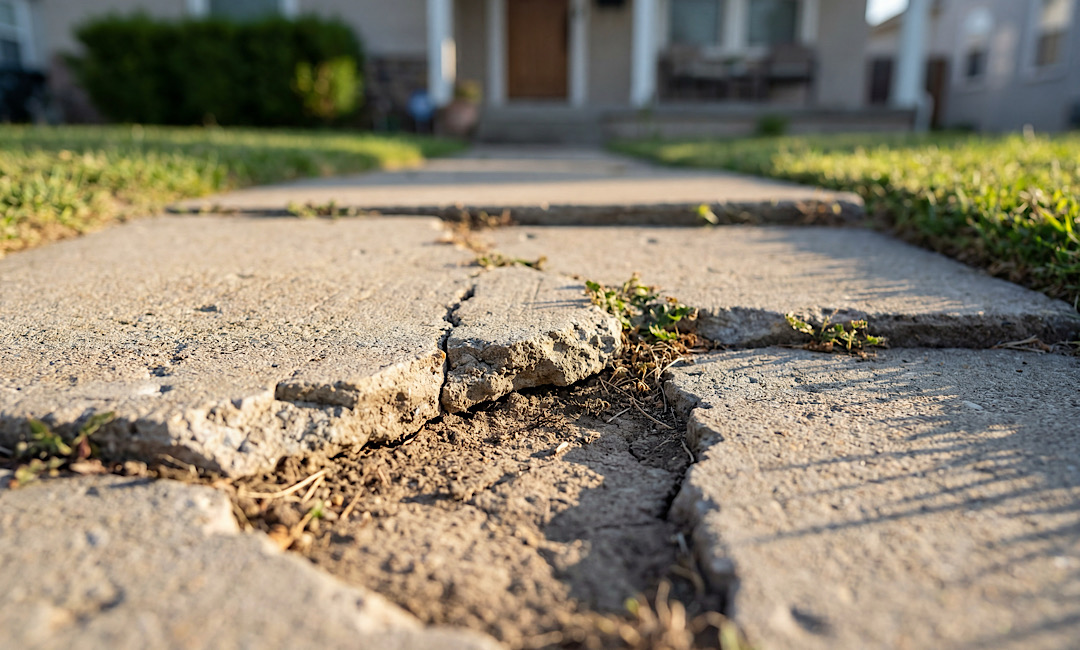
Uneven concrete is often dismissed as a cosmetic issue. A slightly raised sidewalk panel. A driveway slab that slopes just enough to notice. A patio corner that feels uneven underfoot. While these problems may seem minor at first, uneven concrete is one of the most common and overlooked safety hazards around homes and commercial properties.
Trip-and-fall accidents frequently occur on walkways, driveways, and entryways where concrete has shifted. These hazards don’t develop overnight. They form gradually as soil moves beneath slabs, often becoming most noticeable after winter or heavy moisture. By the time homeowners recognize the issue, the risk is already present.
The good news is that uneven concrete can often be fixed quickly and effectively without replacement. Modern concrete lifting methods restore safety, improve appearance, and stabilize slabs in a fraction of the time traditional repairs require.
Why Uneven Concrete Is More Than Just an Eyesore
Uneven concrete affects far more than curb appeal. Even small elevation changes can pose a real danger, especially for children, older adults, and visitors unfamiliar with the property.
Trip hazards commonly occur when:
- One slab edge rises higher than the next
- Walkways settle unevenly over time
- Driveways shift near garage entrances
- Patios and pool decks develop subtle slopes
According to safety studies cited by the National Safety Council, falls are a leading cause of non-fatal injuries at home. Uneven walking surfaces are a major contributing factor. What makes concrete especially risky is how hard and unforgiving it is when someone falls.
Addressing uneven concrete is not just about improving appearance. It’s about reducing the risk of injury and creating safer walking surfaces.
How Uneven Concrete Develops
Uneven concrete almost always starts beneath the surface. While the concrete itself is strong, it relies entirely on the soil beneath it for support. When that soil changes, the slab above responds.
Common causes of uneven concrete include:
- Soil erosion from water runoff
- Freeze–thaw cycles that expand and contract soil
- Poor compaction during original construction
- Seasonal moisture changes
- Plumbing leaks beneath slabs
In Idaho and surrounding regions, freeze–thaw cycles combined with moisture-heavy seasons are a leading cause of slab movement. During winter, frozen soil may temporarily hold concrete in place. Once thawing occurs, unsupported areas settle, creating uneven surfaces. Many of these issues are tied to common causes of concrete settlement and how to prevent it.
Why Uneven Concrete Often Goes Unnoticed
One reason uneven concrete is such a common safety issue is that it develops gradually. Homeowners who see the same walkway or driveway every day may not notice subtle changes until the problem becomes more pronounced.
Unevenness is also easy to miss during winter months when snow and ice hide elevation changes. When spring arrives and surfaces are clear, trip hazards suddenly become visible—and dangerous.
By the time uneven concrete is obvious, the slab has usually already lost support beneath it.
The Real Risks of Ignoring Uneven Concrete
Leaving uneven concrete unaddressed increases risk over time. What starts as a slight slope can quickly become a serious hazard as settlement continues.
Potential risks include:
- Trip-and-fall injuries to residents and guests
- Increased liability exposure for homeowners and property managers
- Water pooling that accelerates further damage
- Stress on adjacent slabs and structures
- Worsening cracks caused by ongoing movement
In many cases, homeowners only address uneven concrete after an accident occurs. In many cases, homeowners only address uneven concrete after an accident occurs. Reviewing the top signs your concrete needs lifting or repair can help identify risks early. Proactive repair is always safer and more cost-effective than reactive repairs.
Why Replacement Isn’t Always Necessary
When homeowners notice uneven concrete, replacement is often the first solution they consider. While replacement may be necessary in cases of severe concrete deterioration, it is frequently unnecessary when the slab itself is structurally sound.
Replacing concrete does not automatically solve the underlying problem. If soil conditions remain unchanged, new concrete can settle the same way the old slab did.
Replacement also comes with drawbacks, including:
- Higher cost
- Longer downtime
- Demolition and debris removal
- Potential damage to surrounding landscaping
In many cases, restoring support beneath the existing slab is all that’s needed. This is why many property owners choose cost-effective concrete repair solutions instead of full replacement.
How Concrete Lifting Restores Safety Quickly
Concrete lifting is a modern repair method designed to correct uneven slabs by addressing the root cause: loss of support beneath the concrete.
At Idaho Concrete Lifting, polyurethane foam injection is used to lift and stabilize sunken slabs. The process involves injecting specialized foam beneath the concrete, where it expands to fill voids and gently raise the slab back into a level position.
Concrete lifting works by:
- Filling empty spaces beneath the slab
- Stabilizing loose or weakened soil
- Raising concrete with precision
- Restoring proper slope and alignment
Because the foam cures quickly, most areas can be used the same day, making this one of the fastest ways to eliminate trip hazards.
How Fast Uneven Concrete Can Be Fixed
One of the biggest advantages of concrete lifting is speed. Unlike replacement, which can take days or even weeks from demolition to curing, lifting is often completed in just a few hours.
In most cases:
- Repairs are completed in a single visit
- Walkways and driveways are usable the same day
- There is minimal disruption to daily routines
- Landscaping and surrounding areas remain intact
This makes concrete lifting especially appealing for homeowners who want immediate safety improvements without extended downtime.
Why Concrete Lifting Is a Long-Term Solution
Concrete lifting doesn’t just level the slab—it stabilizes it. The polyurethane foam used in lifting is water-resistant and does not wash away like traditional mud or grout.
Long-term benefits include:
- Reduced risk of future settlement
- Improved resistance to moisture-related soil movement
- Extended lifespan of existing concrete
- Fewer repeat repairs
By restoring support beneath the slab, lifting prevents the ongoing movement that causes uneven surfaces in the first place. These benefits of polymer concrete lifting make it a durable, long-term solution.
When Concrete Lifting Is the Right Choice
Concrete lifting is ideal when the slab itself is intact but uneven. It is especially effective for:
- Sidewalks and walkways
- Driveways and garage entrances
- Patios and pool decks
- Steps and entry paths
If the concrete is severely cracked, crumbling, or structurally compromised, replacement may be recommended. A professional assessment helps determine the safest and most effective option.
Why Acting Quickly Matters for Safety
Uneven concrete rarely improves on its own. Over time, settlement usually worsens, increasing both safety risks and repair costs.
Addressing uneven concrete early:
- Reduces the risk of injury
- Improves accessibility
- Prevents further slab movement
- Protects the surrounding concrete
From a safety standpoint, eliminating trip hazards as soon as they are identified is always the best approach.
What Homeowners Should Expect From a Professional Repair
A professional concrete lifting service begins with an assessment to confirm that the slab is suitable for lifting. This evaluation focuses on slab condition, elevation differences, and underlying soil support.
Once lifting begins, the process is controlled, precise, and minimally invasive. Homeowners are often surprised by how quickly safety is restored.
What Idaho Homeowners Should Take Away
Uneven concrete is more than a cosmetic issue. It is a genuine safety hazard that increases the risk of trip-and-fall injuries and property damage. The longer it is left unaddressed, the greater the risk becomes.
The good news is that uneven concrete can often be fixed quickly without replacement. Modern concrete lifting restores level surfaces, improves safety, and stabilizes slabs in a fraction of the time required for traditional repairs.
Idaho Concrete Lifting helps homeowners eliminate trip hazards and restore safe walking surfaces with efficient, long-lasting solutions. When uneven concrete is addressed early and correctly, safety can be restored in hours—not weeks.