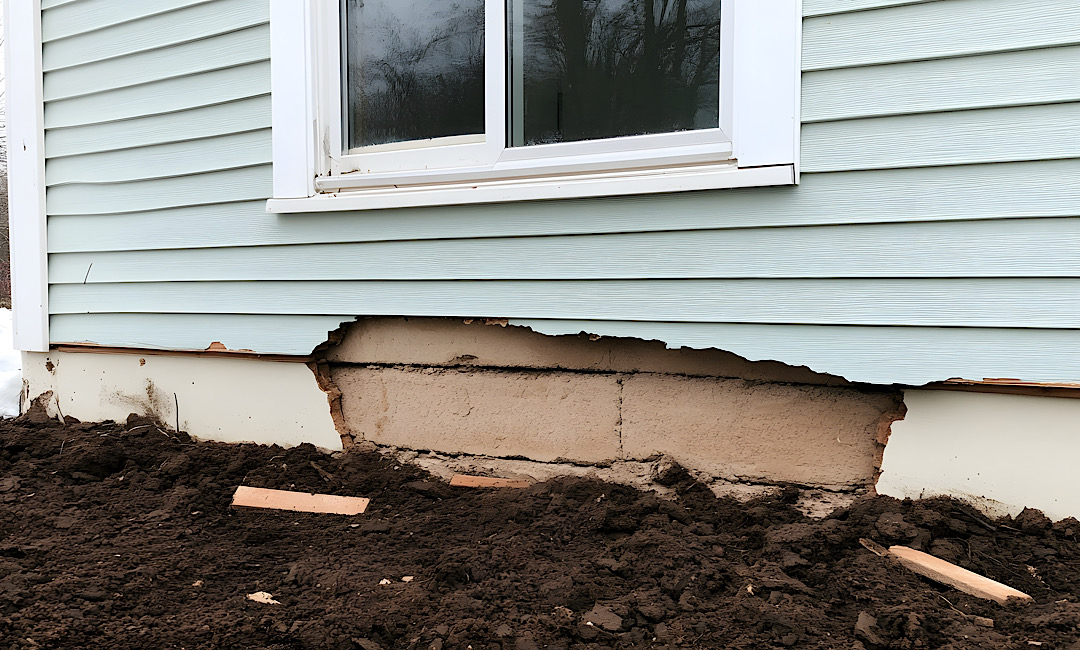
When Idaho homeowners notice uneven driveways, sunken sidewalks, or dipping patios after winter, the blame almost always falls on cold temperatures. Freezing weather feels like the obvious culprit. After all, concrete cracks in winter, ice expands, and everything seems to shift once the snow melts. But cold itself is not the main reason concrete sinks during Idaho winters.
The real cause is far less obvious and far more destructive: moisture-driven soil movement beneath the concrete.
At Idaho Concrete Lifting, we see this misconception every winter. Homeowners assume their slabs sank because of freezing temperatures, when in reality, the problem began underground long before the concrete moved. Understanding this distinction is critical because fixing the wrong problem leads to repeated damage, wasted money, and worsening conditions year after year.
This article breaks down why concrete actually sinks in winter, how Idaho’s soil and moisture patterns play a central role, and what most homeowners miss until the damage becomes impossible to ignore.
Why Cold Gets the Blame — and Why It’s Misleading
Cold temperatures do affect concrete, but mostly at the surface level. Freezing conditions contribute to cracking through freeze–thaw cycles, where water expands as it freezes inside small pores or cracks. This process weakens concrete over time, but it does not usually cause slabs to sink on its own.
Concrete sinks when it loses support beneath it.
Concrete is heavy. A standard driveway slab can weigh several thousand pounds. As long as the soil underneath remains stable and compact, the slab stays level—even in extreme cold. Problems begin when that soil shifts, compresses, erodes, or collapses.
Cold temperatures may trigger visible damage, but they are not the root cause. Moisture and soil behavior are.
The Real Culprit: Moisture and Winter Soil Movement
The number one reason concrete sinks in winter is changes in moisture content within the soil beneath the slab. In Idaho, winter creates the perfect conditions for this process to occur repeatedly.
Here’s how it happens.
Moisture Saturation Before Freezing
In late fall and early winter, Idaho typically experiences rain, melting snow, and fluctuating temperatures. This moisture soaks into the soil surrounding and beneath concrete slabs.
Soils common in Idaho—especially clay-heavy and volcanic soils—are excellent at retaining water. Once saturated, they become unstable.
Freezing Locks the Soil in Place
When temperatures drop, the moisture within the soil freezes. This temporarily locks the soil structure into place. On the surface, everything may look stable, even if damage is already forming below.
Thawing Causes Soil Collapse
As temperatures rise, frozen moisture thaws and drains away or redistributes unevenly. This process leaves behind voids, air pockets, and weakened soil zones beneath the concrete.
Once the soil can no longer support the weight of the slab, gravity takes over. The concrete sinks to fill the empty space.
This cycle can repeat multiple times in a single winter, especially in regions of Idaho where daytime temperatures rise above freezing and fall again overnight.
Why Idaho’s Soil Makes the Problem Worse
Not all soil behaves the same way, and Idaho’s soil conditions significantly increase the risk of winter concrete settlement.
Many areas across the state contain expansive soils that react dramatically to moisture changes. These soils expand when wet and contract when dry or frozen. During winter, repeated expansion and contraction weakens the soil’s structure.
Additionally, poorly compacted fill soil—often used during construction—settles over time. Winter moisture accelerates this process by washing fine particles away and creating voids beneath slabs.
In simple terms, the soil moves long before the concrete does, often requiring professional soil stabilizing to prevent long-term failure.
The American Society of Civil Engineers has noted that soil instability combined with moisture fluctuations is a leading cause of residential concrete settlement in cold regions. In simple terms, the soil moves long before the concrete does.
Common Areas Where Winter Concrete Sinking Occurs
Concrete settlement caused by winter soil movement typically appears in specific areas around a home.
Driveways are especially vulnerable because they collect melting snow and ice. Water flows toward low points, soaking into the soil along slab edges and expansion joints.
Sidewalks and walkways are another common problem area. These slabs are often thinner and installed over less compacted soil, making them more susceptible to void formation.
Garage floors can also sink when moisture enters through cracks or along foundation edges. Meltwater from vehicles increases saturation directly beneath the slab.
Patios and pool decks frequently experience settlement because they are exposed to snow accumulation and poor drainage during winter months.
In each case, the visible damage appears at the concrete level, but the true failure occurs below the surface.
Why Winter Damage Often Goes Unnoticed
One of the most frustrating aspects of winter-related concrete sinking is how quietly it happens.
Snow cover hides early warning signs. Ice masks uneven surfaces. Frozen soil temporarily holds slabs in place, delaying visible movement. By the time spring arrives, the damage has already occurred.
Homeowners often notice:
- Uneven edges after snowmelt
- Pooling water where slabs once drained properly
- Sudden tripping hazards that were not present in the fall
- Cracks that widened rapidly over a single winter
At this point, the slab has already lost support, and cosmetic repairs alone will not solve the issue.
The Difference Between Cracking and Sinking
Understanding the difference between cracking and sinking is essential for proper repair.
Cracks are surface-level failures. They indicate stress within the concrete itself and often result from freeze–thaw expansion or load pressure.
Sinking is a structural support failure. It means the soil beneath the slab can no longer carry the weight of the concrete.
Sealing cracks without addressing soil loss does nothing to stop settlement. In fact, it often hides the problem until it becomes worse.
Idaho Concrete Lifting frequently evaluates properties where homeowners attempted surface repairs, only to discover that the slab continued sinking because the underlying voids remained.
Why Replacement Is Often the Wrong Solution
Many homeowners assume that replacing a sunken slab is the only fix. In reality, replacement often fails to address the root cause.
If the soil conditions remain unchanged, new concrete will sink the same way the old slab did. Winter moisture will continue to saturate the ground, and thaw cycles will continue to create voids.
Replacement is also significantly more expensive, disruptive, and time-consuming than stabilization and lifting.
The key is restoring support beneath the slab, not just pouring new concrete on top of unstable soil.
How Concrete Lifting Addresses the Real Problem
Concrete lifting directly targets the underlying cause of winter settlement: soil instability and voids.
At Idaho Concrete Lifting, polyurethane foam injection is used to lift and stabilize sunken slabs. This process involves injecting high-density foam beneath the concrete, where it expands to fill voids and restore support. The foam displaces water, strengthens the soil structure, and creates a stable base that resists future moisture-related movement.
Unlike traditional mudjacking, polyurethane foam is lightweight, water-resistant, and effective even in cold conditions.
Most importantly, it addresses the real reason concrete sinks: loss of support beneath the slab.
Why Winter Is Actually a Smart Time to Act
Waiting until spring often allows additional damage to occur. Continued freeze–thaw cycles can enlarge voids and increase settlement.
Addressing sinking concrete during winter or early spring stabilizes slabs before seasonal moisture peaks. It also prevents further movement when snowmelt saturates the soil.
Modern concrete lifting methods allow repairs to be completed quickly, with minimal disruption, even in colder months.
FAQs About Winter Concrete Sinking
Is freezing weather ever the main cause of sinking concrete?
No. Freezing contributes to cracking, but sinking occurs when soil loses strength or erodes due to moisture changes.
Why does my concrete look fine in winter but sink in spring?
Frozen soil temporarily supports the slab. Once thawing occurs, weakened soil collapses, and the concrete settles.
Can better drainage help prevent winter settlement?
Yes. Proper grading and drainage reduce soil saturation, which lowers the risk of void formation.
Will sealing my concrete stop it from sinking?
Sealing helps limit water entry, but it cannot correct soil loss that has already occurred.
How long does concrete lifting last?
When performed correctly, lifting provides long-term stabilization by restoring support and preventing further soil movement.
What Idaho Homeowners Should Take Away
Concrete sinking in winter is not caused by cold temperatures alone. It is the result of moisture-driven soil movement that quietly undermines slabs beneath the surface.
Understanding this distinction allows homeowners to choose solutions that actually work. Addressing soil instability, rather than just surface damage, prevents repeated failure and protects long-term property value.
Idaho Concrete Lifting specializes in identifying and correcting the real causes of concrete settlement. By restoring support where it matters most, homeowners can avoid unnecessary replacement and stop winter damage at its source.