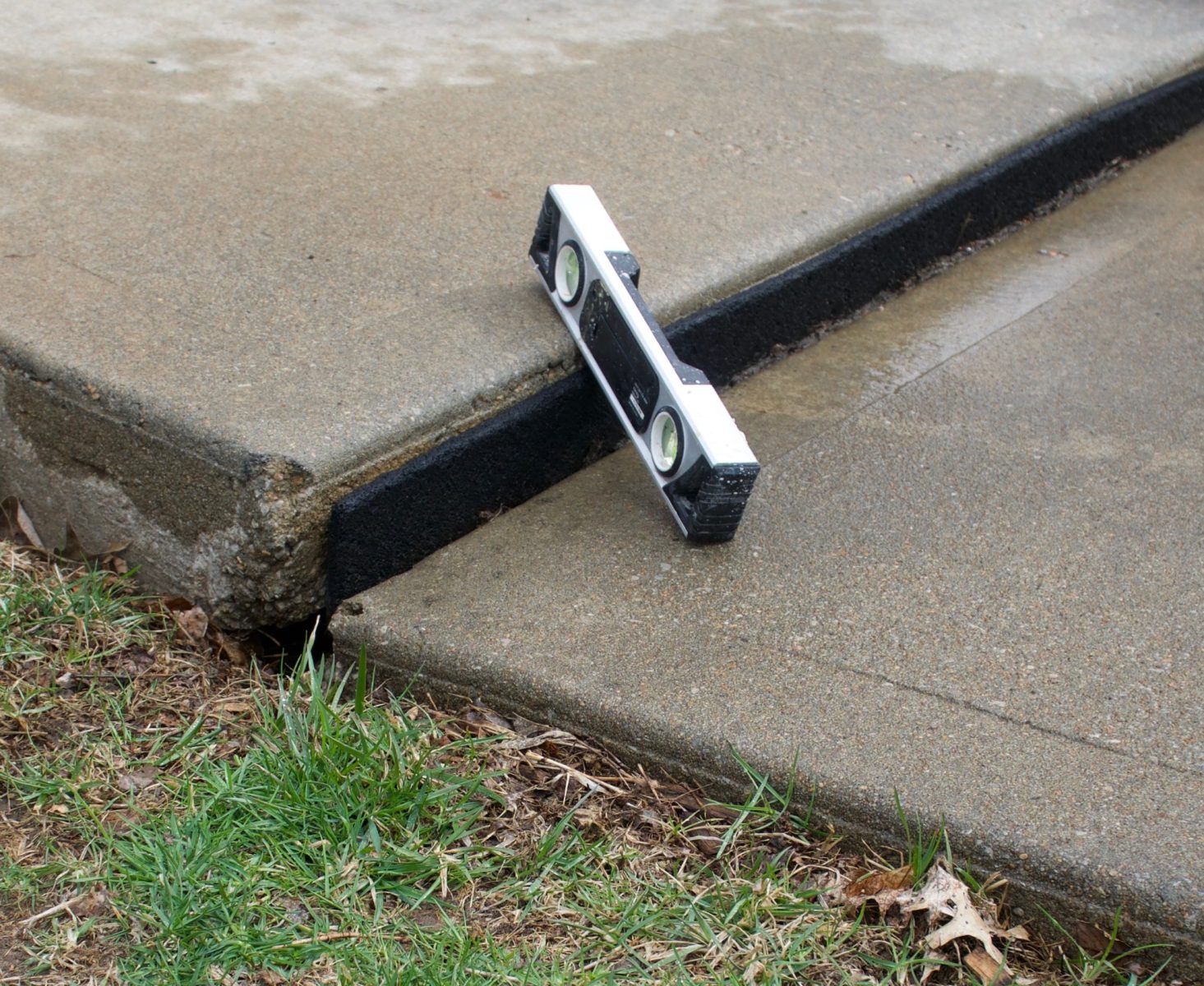
A front porch is the one slab on your property that everybody steps on and nobody thinks about, right up until the day it starts pulling away from the house. First the caulk line at the wall opens a little. Then rainwater sits by the door instead of draining off. Then the storm door catches on the threshold, and the gap along the siding is wide enough to see daylight through.
Here is the part most homeowners do not expect: a settled porch is almost always a soil problem, not a concrete problem. That distinction decides everything that follows. At Idaho Concrete Lifting, the majority of porches we assess around Boise, Meridian, Nampa and the wider Treasure Valley are structurally sound slabs sitting on ground that moved out from under them. Sound slabs can be lifted back. Failed slabs cannot. This post is about telling the two apart before you spend money on the wrong one.
Why front porch slabs settle faster than the rest of your entry
When your home was built, a trench was excavated around the foundation and then refilled once the walls were in. That refilled ring is called backfill, and it is loose by definition. No matter how well a crew tamps it, backfill never reaches the density of the undisturbed native soil a few feet away. Front porches sit squarely on top of that ring. Your driveway twenty feet out is usually resting on ground that has been settling quietly for thousands of years. Your porch is resting on ground that was disturbed the year the house went up, and it is still consolidating.
Water finishes the job. The porch is the single spot on the property where roof runoff, downspout discharge, gutter overflow, splashback and sprinkler overspray all concentrate in the same few square feet. Every cycle carries fine particles out of that loose backfill and opens space beneath the slab. Add Idaho’s freeze and thaw swings, where saturated soil expands, then collapses to a smaller volume when it dries out, and the slab loses its support a fraction of an inch at a time. If you want the full mechanics of that process, we cover it in why concrete sinks. For the rest of this post, assume the ground gave way and focus on what to do about the porch.
Signs your porch is settling rather than simply aging
- A widening gap between the porch edge and the house wall, often with old caulk stretched or torn
- Water that pools near the door or runs back toward the house instead of away from it
- A storm door or entry door that drags, or a threshold gap that grew over one or two seasons
- A hollow, drum-like sound when you tap the slab near the outside edges compared with a solid thud near the foundation
- The porch separating from the steps, leaving a lip at the joint
- New cracks in mortar or brick veneer directly above the porch line
- Railing posts that have gone out of plumb without anything hitting them
One useful test: set a level or a straight board across the porch from the house outward. A properly built porch pitches away from the house by roughly a quarter inch per foot. If yours is flat, or worse, if it now tips back toward the door, it has moved.
Lift or replace: how the decision actually gets made
The question is not really about the sinking. It is about the condition of the concrete itself. Polyurethane lifting moves a slab back to where it belongs and fills the space underneath, but it works with the slab you already have. If that slab is sound, lifting is usually the better value by a wide margin. If the slab has failed as a piece of concrete, no amount of lifting fixes it.
When lifting is the right call
- The porch is intact or broken into a small number of large, stable pieces
- Cracks are tight and the edges still meet cleanly rather than crumbling
- The surface is in reasonable shape, with no widespread flaking or exposed aggregate
- The settlement is anywhere from a half inch to several inches, which covers most residential porches
- You are happy with the size, shape and finish of the porch and simply want it back at the correct elevation and pitch
When replacement is the honest answer
- The slab has broken into many small pieces that would move independently under lifting pressure
- The surface is spalling badly, usually from years of de-icing salt, leaving soft, pitted concrete with aggregate exposed
- The concrete was poured thin or without adequate reinforcement and flexes underfoot
- You want a different footprint, a different finish, or a porch that was simply built wrong in the first place
We will tell you when replacement is the better call. Lifting a porch that should be torn out is not a repair, it is a delay that you pay for twice.
| Polyurethane lifting | Tear out and repour | |
|---|---|---|
| Time on site | Typically a few hours | Multiple days across demolition, forming and pouring |
| When you can use it | Same day, usually within about an hour of the lift | Days before foot traffic, longer for heavier loads |
| Relative cost | A fraction of replacement in most cases | Highest option, plus disposal |
| Landscaping impact | Minimal, the work is done through small holes in the slab | Heavy equipment access, likely damage to beds and lawn |
| Surface match | Keeps your existing porch, so no color mismatch with steps or walkway | New concrete will not match adjacent older slabs |
| Addresses the soil | Yes, the voids are filled and the material is unaffected by water | Only if the contractor properly recompacts the base first |
What foam lifting can and cannot correct
Being specific about this saves everyone a difficult conversation later.
It can raise the slab back to its original elevation, restore the pitch away from the house, fill the voids underneath so nothing is left hollow, close the drop at the threshold, and stabilize loose soil by injecting into the space rather than washing it further out. Because the expanding polymer is closed-cell, it does not absorb groundwater or wash away the way some older base materials do. We explain the material side in more detail in our overview of polymer concrete lifting.
It cannot repair a deteriorated surface, restore reinforcement that was never there, reverse salt damage, or make a cracked slab whole again. Cracks can be cleaned and sealed after the lift so water stops entering, and that matters, but sealing is a maintenance step, not a resurfacing. Lifting also cannot help if the porch was originally poured at the wrong height relative to the door, because the problem in that case is the design, not the settlement.
What drives the cost of front porch repair
Porch pricing is not a flat per square foot number, which is why we do not publish one. Four things move it:
- Size and thickness of the slab. A four foot by six foot stoop and a wraparound covered porch are different jobs.
- How much void is under there. Lifting is priced largely by the volume of material it takes to fill the space and raise the slab. A porch that dropped a half inch over a small void costs meaningfully less than one that dropped three inches over a washed-out backfill trench.
- Access and attachments. Railings, columns, a covered roof carried by porch posts, or a slab that ties into steps all add care and time.
- What else needs sealing? Most porch jobs finish with joint and crack sealing along the house line so the water that caused the problem stops getting back into the backfill.
The practical takeaway is that porches caught early are cheap to fix, and porches left for another three winters are not. The void keeps growing whether or not you look at it.
Your porch and your steps are two separate jobs
Porches and the steps in front of them settle at different rates because they sit on different amounts of fill, and they are often not tied together structurally. It is common to lift one and not the other, or to lift both and re-set the joint between them. If the movement you are seeing is mainly in the treads and risers rather than the porch deck, start with our post on lifting sinking concrete steps back into place. If the steps themselves are breaking apart rather than dropping, our page on cracked stairs covers that repair path.
What the finished porch looks like
This surprises people. Lifting is done through a series of penetrations roughly the diameter of a pencil, placed deliberately along the slab so they disappear into the surface pattern. Polyurethane is injected through those ports, expands in the void, and the crew watches the slab with laser levels as it comes up. The material reaches most of its strength within minutes, which is why you can walk on the porch the same afternoon and park a car on a driveway slab the same day.
Afterward, the ports are patched with a cementitious mix. On a weathered porch, the patches are visible up close for a short time and then blend as they weather. What you do not get is a torn-up yard, a new slab that is three shades lighter than the walkway beside it, or a week of walking in through the garage.
If you are fixing the porch ahead of a sale rather than for your own comfort, the calculus changes a little, and we cover the resale angle separately in our piece on fixing sunken concrete before you list.
Why early October is the right time to handle it
A void under a porch is a reservoir. Through fall, it collects water, and once overnight temperatures drop below freezing, that water expands inside the space, pushes on the underside of the slab, then releases when it thaws. Repeat that across an Idaho winter and a slab that dropped a half inch in five years can drop another half inch in one season, often taking a crack with it.
There is also the practical matter of ice. A porch that pitches back toward the door does not drain, and what does not drain freezes right where you step out in the morning. Correcting the pitch before the first hard freeze is a safety fix as much as a cosmetic one.
Frequently asked questions
Can a front porch really be lifted, or only flat slabs like driveways?
Porches are lifted routinely. The process is the same as it is for a driveway or patio. The extra care comes from working around railings, columns and the connection to the house, not from the slab itself.
How long does a front porch lift take?
Most residential porches are a few hours of work from setup to cleanup, and you can use the porch the same day.
Will lifting close the gap between my porch and the house?
Raising the slab back to grade closes most of it. The remaining joint should be sealed rather than filled with concrete, because the two structures need to move independently.
Will my porch sink again after it is lifted?
Filling the void removes the space the slab was falling into, and polyurethane does not wash out or break down with water exposure. What no repair can do is stop new water problems. If a downspout is still dumping at the porch edge, redirect it.
Is the porch worth fixing if I plan to sell in a year or two?
A visible slope at the front door is one of the first things buyers and inspectors flag, and it invites questions about the foundation that are usually unwarranted. Correcting it before listing is generally far cheaper than negotiating against it after an inspection.
How do I know for certain whether mine should be lifted or replaced?
Someone has to look at it. Slab condition, crack pattern, thickness and the extent of the void are not things you can judge from a photo, and an honest assessment sometimes ends with a recommendation to replace.
Get a straight answer on your porch
If your front porch has pulled away from the house, holds water by the door, or has left a lip at the steps, the useful next step is an on-site assessment where someone sounds the slab, checks the pitch and tells you plainly whether it is a lift or a tear out. Idaho Concrete Lifting serves homeowners throughout the Treasure Valley and Eastern Oregon. Reach out to schedule an assessment and get the porch handled before the ground freezes.