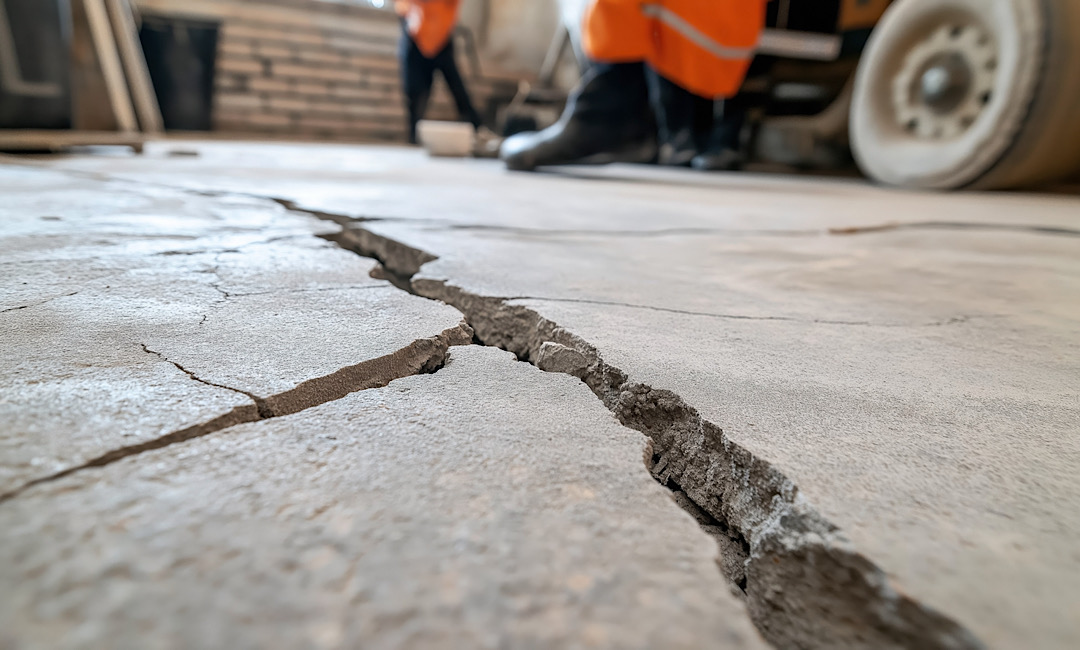
When a garage floor starts to sink, crack, or develop an uneven surface, most homeowners assume the only solution is to tear it out and start over. Idaho Concrete Lifting works with homeowners throughout southern Idaho and eastern Oregon who are surprised to learn that a sunken garage floor can almost always be restored to its original level quickly, cleanly, and at a fraction of the cost of replacement using polyurethane foam concrete lifting.
Understanding how the process works, why garage floors sink in the first place, and how polyurethane foam compares to older repair methods helps homeowners make confident decisions about a problem that can escalate quickly if it goes unaddressed. A garage floor that sinks a little this summer often sinks more by next spring, and the conditions that caused the initial movement don’t resolve on their own.
Why Garage Floors Sink in the First Place
Before understanding how polyurethane foam fixes a sunken garage floor, it helps to understand what caused it to sink. The concrete slab itself is rarely the primary problem. In most cases, the issue is what is happening beneath it.
Garage floor slabs are poured on a prepared subgrade, which is the compacted soil or gravel base that supports the slab from below. When that subgrade loses density, shifts, or develops voids, the slab above it loses support and begins to settle. In Idaho’s climate, several specific conditions drive this process.
Soil moisture changes are the most common culprit. Southern Idaho’s clay-heavy soils expand when wet and contract significantly when dry. The hot, dry summers that characterize the region cause soil beneath garage slabs to lose moisture and shrink, pulling away from the underside of the concrete and creating voids that allow the slab to drop. This seasonal cycle of expansion and contraction gradually works the subgrade into a less stable condition with each passing year.
Poor drainage around the garage foundation accelerates the process. Water that pools near the garage, runs beneath the slab from outside, or enters through gaps at the garage door threshold saturates the subgrade, softens it, and can wash fine soil particles away over time. Each time this happens, the subgrade becomes less capable of supporting the slab above it.
Inadequate compaction at the time of original construction is a third factor. A subgrade that was not compacted thoroughly before the slab was poured will settle over time as the soil consolidates under load, and no amount of surface maintenance prevents this underlying movement from eventually showing up as slab settlement. Why concrete sinks covers these mechanisms in detail and explains why the problem is almost always below the surface rather than in the concrete itself.
How Polyurethane Foam Concrete Lifting Works
Polyurethane foam concrete lifting, sometimes called polyjacking or poly lift and level, is a process that restores a sunken slab to its original position by injecting expanding polyurethane foam beneath it. The process is straightforward in concept and precise in execution.
Small holes, typically about the diameter of a dime, are drilled through the sunken slab at strategic locations determined by the technician’s assessment of where void formation and settlement have occurred. A specialized injection port is inserted into each hole, and two-part polyurethane foam is injected beneath the slab through the port.
As the foam enters the void space beneath the slab, it expands rapidly, filling the void, compressing any loose soil, and exerting upward pressure against the underside of the concrete. The technician controls the lift carefully by monitoring the slab’s movement and adjusting the injection sequence to raise the slab evenly to its original level. Once the correct elevation is achieved, injection stops, the foam cures in place, and the small drill holes are patched.
The entire process for a typical garage floor takes a few hours. The cured foam is rigid, stable, and does not compress, biodegrade, or wash away. The garage floor is ready for normal use within an hour or two of completion. The benefits of poly lift and level for sinking concrete explains the material properties and performance characteristics of polyurethane foam in more detail.
How Polyurethane Foam Compares to Mudjacking
Mudjacking, also called slabjacking or pressure grouting, is an older concrete lifting method that uses a slurry mixture of water, soil, and cement pumped beneath a sunken slab to raise it. For many years, it was the standard method for concrete lifting, and it is still offered by some contractors. Understanding the differences between mudjacking and polyurethane foam helps property owners choose the right approach.
The material difference is the most significant practical distinction. Mudjacking slurry is heavy, adding significant weight to the subgrade that was already struggling to support the slab above it. Polyurethane foam is extremely lightweight, adding negligible load to the subgrade while providing superior void filling and compressive strength.
Mudjacking uses larger drill holes, typically two inches or more in diameter, compared to the dime-sized holes used in polyurethane injection. Larger holes require more substantial patching and leave a more visible repair pattern on the slab surface. Mudjacking slurry also takes significantly longer to cure, typically twenty-four hours or more before the surface can bear vehicle traffic. Polyurethane foam cures within minutes.
The longevity difference is also worth understanding. Mudjacking slurry can shrink, crack, or wash away over time as the same moisture and soil conditions that caused the original settlement continue to affect the repair material. Polyurethane foam is inert and unaffected by moisture, soil chemistry, or seasonal temperature changes. The science behind pressure grouting provides background on the grouting methodology and its applications.
How Polyurethane Foam Compares to Replacement
Full slab replacement is the most disruptive and expensive approach to a sunken garage floor, and for most residential garage situations, it is also the least necessary. Understanding what replacement actually involves helps put the comparison in perspective.
Replacing a garage floor requires breaking out and disposing of the existing concrete, re-preparing the subgrade, pouring new concrete, and waiting the full cure period before the garage can be used again. This process typically takes several days from start to finish, generates significant debris, and costs substantially more than polyurethane lifting even before accounting for the inconvenience of an unusable garage during the work.
The result of replacement is a new slab sitting on the same subgrade conditions that caused the original slab to sink. If those subgrade conditions are not specifically addressed as part of the replacement process, the new slab is subject to the same settlement risk as the one it replaced. Polyurethane lifting, by contrast, directly addresses the void formation and subgrade instability that caused the problem, restoring both the slab position and the support structure beneath it simultaneously.
Replacement makes sense when a garage slab is severely fractured across multiple sections, when the concrete has deteriorated structurally beyond the point of functional repair, or when a significant reconfiguration of the garage is planned. For the typical residential garage floor with settlement and uneven sections, lifting is the more practical, more economical, and less disruptive solution. Why Idaho Concrete Lifting is the best choice for foundation repair addresses the broader case for professional repair over replacement in Idaho’s specific conditions.
Signs That a Garage Floor Needs Lifting
Identifying the warning signs that a garage floor has lost adequate subgrade support helps homeowners act before settlement progresses to the point where the repair becomes more complex.
A visible step or height difference between the garage floor and the garage apron where the driveway meets the garage is one of the clearest indicators. When the garage floor has settled relative to the apron, vehicles crossing the transition feel a noticeable bump, and the gap between the two surfaces provides a direct water entry pathway beneath the slab.
Cracks that run diagonally across slab sections or span the full width of the garage floor indicate that the slab is experiencing stress from uneven support beneath it. These are different from the narrow surface shrinkage cracks that appear in most concrete over time and are a more urgent indicator of subgrade problems. Addressing common concrete cracks, their types, causes, and repair methods helps homeowners distinguish between surface cracks and structural movement cracks.
A hollow sound when the floor is tapped, or a slightly soft or flexible feeling underfoot, indicates that voids have formed beneath the slab. Water pooling in low spots after rain or when washing the garage floor signals that the original grade has been disrupted by settlement.
What the Repair Process Looks Like for Homeowners
For homeowners who have not seen polyurethane concrete lifting performed before, the process often looks surprisingly simple given the results it achieves. A technician arrives with the injection equipment and foam materials, assesses the floor to identify the settlement pattern and determine injection locations, drills the small access holes, and begins the injection sequence.
The expanding foam can often be heard filling the void space beneath the slab. The slab rises gradually and visibly as injection continues, and the technician monitors the lift carefully to ensure even elevation across all sections. Once the target level is reached, the ports are removed, the drill holes are patched with a cement-based filler, and the floor is ready for use within a short period.
The small patched holes are visible on close inspection but are not prominent, and for most homeowners, the practical result of a level, stable garage floor far outweighs any cosmetic consideration about the repair pattern. Our work gallery shows completed projects that give homeowners a realistic picture of what the finished repair looks like.
Frequently Asked Questions About Polyurethane Foam Garage Floor Lifting
How long does polyurethane foam garage floor lifting take?
Most residential garage floor lifting projects are completed in a few hours, depending on the size of the garage and the extent of the settlement. The polyurethane foam cures rapidly after injection, and the floor is typically ready for foot traffic within an hour and vehicle traffic within a few hours of completion. This makes it practical to schedule the repair on a day when the garage needs to be back in service quickly.
Will the lifted floor stay level or settle again?
The polyurethane foam used in the lifting process is rigid, stable, and permanent. It does not compress under load, degrade over time, or wash away. If the conditions that caused the original settlement, such as poor drainage directing water beneath the slab, are corrected alongside the lifting, the repair is expected to remain stable long-term. If contributing drainage or soil conditions are not addressed, new void formation in a different area is possible over time, though the filled and stabilized area itself remains in position. Soil stabilization can be incorporated when subgrade conditions require more comprehensive stabilization.
Is polyurethane foam safe to use beneath a garage floor?
Yes. The polyurethane foam used in concrete lifting is an inert, stable material once cured. It does not leach chemicals into the surrounding soil, does not off-gas after curing, and is not affected by the moisture and temperature conditions typical of a residential garage environment. It is the same category of material used in commercial and infrastructure applications where long-term stability and environmental compatibility are required.
Can polyurethane lifting fix all the cracks in my garage floor?
Concrete lifting addresses the underlying settlement and void formation that cause structural cracks to develop and worsen. Once the slab is lifted and stabilized, existing cracks can be cleaned and sealed to prevent water infiltration. The lifting process does not close existing cracks, but by restoring subgrade support, it removes the movement stress that was driving crack development. Crack joint caulking, as a follow-up step, seals existing cracks and protects the repair long term.
How does polyurethane lifting compare in cost to replacing the garage floor?
Polyurethane concrete lifting typically costs significantly less than full slab replacement, often by fifty percent or more, depending on the scope of the work. The cost advantage is even more pronounced when the indirect costs of replacement are factored in, including debris disposal, extended downtime, and the risk of future settlement if subgrade conditions are not specifically addressed during replacement. For most residential garage situations where the concrete is structurally sound, lifting delivers comparable or better long-term results at a substantially lower total cost. Cost-effective concrete repair solutions provides a broader perspective on the cost comparison between repair methods.
What if my garage floor has both settlement and significant cracking?
Settlement and cracking often occur together because uneven subgrade support creates the bending stress that causes structural cracks. In most cases where both conditions are present, lifting to restore subgrade support is the first priority, followed by crack sealing to protect the repaired surface. A professional assessment will evaluate the extent of both conditions and recommend the most appropriate sequence of repairs. In cases where cracking is severe enough to have compromised the structural integrity of the slab itself, replacement of the affected sections may be recommended alongside lifting of the remaining area.
Get a Free Assessment Before the Problem Gets Worse
A sunken garage floor that is addressed this summer, enters fall and winter in a stable, supported condition rather than continuing to settle through another season of freeze-thaw cycling. Contact Idaho Concrete Lifting to schedule your free on-site assessment and find out whether polyurethane foam lifting is the right solution for your garage floor.