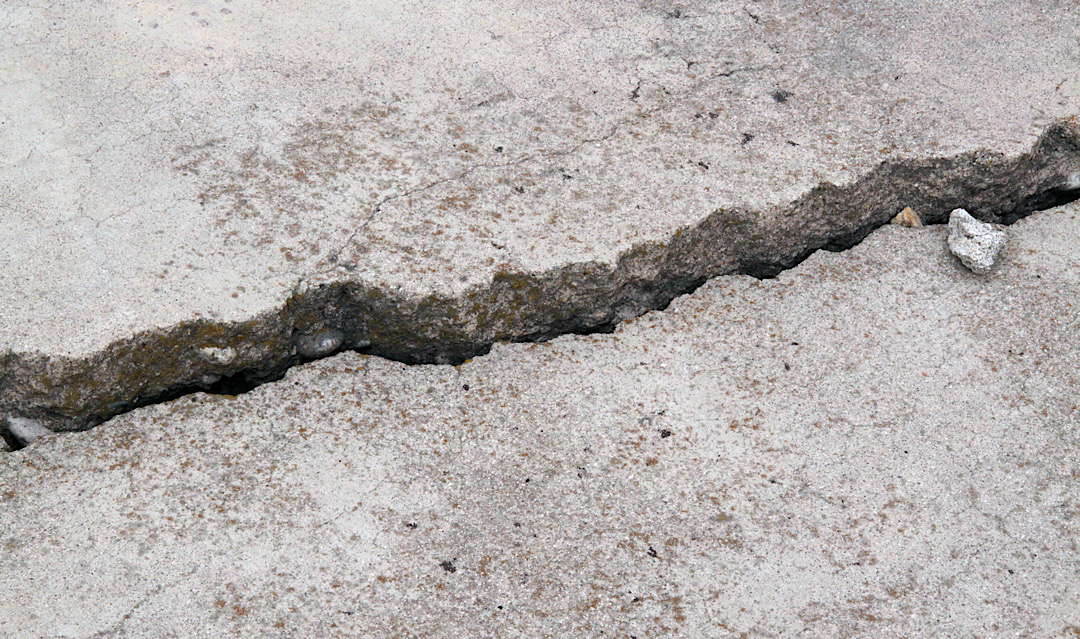
Cracks in a driveway. A sidewalk that no longer feels level. A patio slab that suddenly holds water where it never did before. For many Idaho homeowners, these signs immediately spark concern. The assumption is often that the concrete itself is failing and that replacement is unavoidable. That assumption, while understandable, is not always correct.
In reality, not all cracked or uneven concrete is failing. In fact, a significant number of concrete problems across Idaho are caused by slab settlement rather than structural breakdown. Knowing the difference is important because it determines whether replacement is truly necessary or whether concrete lifting is the more appropriate, cost-effective solution.
At Idaho Concrete Lifting, one of the most common conversations we have with homeowners is helping them understand what is actually happening beneath their concrete. When the cause is correctly identified, many surfaces can be stabilized and restored without the expense, mess, and disruption of replacement. Understanding the nature of the problem is the first step toward choosing the right solution.
Why Concrete Issues Are Often Misunderstood
Concrete is commonly viewed as permanent. Once it is poured, homeowners expect it to last for decades without change. When visible issues appear, it is natural to assume that the concrete has reached the end of its lifespan or was installed incorrectly from the beginning.
The reality is that concrete is extremely strong when it is properly supported. What it depends on is stable soil beneath it. When that support shifts, compresses, or erodes, even well-poured, structurally sound concrete can move. The slab itself may still be strong, but it is no longer evenly supported.
Many surface-level inspections focus only on what can be seen above ground. Without evaluating soil conditions, drainage patterns, and subsurface voids, settlement is often misdiagnosed as concrete failure. Replacement then becomes the default recommendation, even when it does not address the root cause of the problem. In some cases, replacing a slab without fixing soil issues simply leads to the same problem returning a few years later.
What Concrete Failure Actually Means
Concrete failure occurs when the slab itself can no longer perform its intended function due to material deterioration. This type of failure is far less common than most homeowners expect, especially in residential settings.
True concrete failure often involves multiple warning signs at once, including:
- Concrete that crumbles or turns powdery when touched
- Large cracks running through the full thickness of the slab
- Sections breaking apart under normal use or weight
- Widespread surface deterioration with exposed aggregate
These issues are typically caused by poor mix design, improper curing during installation, extreme age, or long-term chemical exposure such as deicing salts. When concrete reaches this condition, lifting is no longer effective because the slab lacks the structural integrity needed to be safely raised or stabilized.
In these situations, replacement may be the only viable option. However, it is important to understand that this level of deterioration is not the norm for most driveways, sidewalks, patios, or garage floors experiencing unevenness.
What Concrete Settling Looks Like Instead
Concrete settling happens when the soil beneath the slab shifts, compresses, or erodes while the concrete itself remains mostly intact. This is the most common cause of uneven concrete throughout Idaho and is often mistaken for failure. If you are unsure whether your slab qualifies, reviewing the top signs your concrete needs lifting or repair can provide clarity.
Settlement often shows up as:
- Solid slabs that are no longer level
- Cracks forming near control joints or slab edges
- One section is sitting lower than the surrounding concrete
- Gaps appearing between slabs and foundations or steps
In these cases, the concrete has not failed. It has lost support underneath. Because the slab itself is still structurally sound, it can often be lifted and stabilized instead of replaced. Addressing the settlement restores both function and safety without removing existing concrete.
Why Settlement Is So Common in Idaho
Idaho’s climate and soil conditions make slab settlement far more likely than concrete failure. Seasonal moisture plays a major role in this process.
During fall and winter, rain, snow, and melting ice saturate the soil. Many Idaho soils, especially clay-rich and volcanic soils, retain moisture and expand when wet. As temperatures drop, that moisture freezes. When it thaws, the soil contracts and can shift or wash away, leaving voids beneath concrete slabs.
This freeze–thaw process can occur dozens of times in a single winter. Over time, the soil loses density and consistency, while the concrete above remains intact but unsupported. Gravity then does the rest. The slab slowly settles into empty space, creating uneven surfaces that become noticeable once snow melts or temperatures stabilize.
Why Cracks Alone Don’t Mean Replacement
Cracks are one of the most misunderstood aspects of concrete damage. While cracks can signal a problem, they do not automatically mean the concrete is failing or needs to be replaced. A deeper understanding of types, causes, and repair methods for concrete cracks helps homeowners distinguish cosmetic concerns from structural ones.
Cracks caused by settlement are usually:
- Narrow and relatively clean
- Located near slab edges or joints
- Paired with visible elevation changes
These cracks form as the slab redistributes stress after losing support beneath it. When the slab is lifted back into position, many of these cracks close or become far less noticeable. In some cases, crack sealing after lifting is all that is needed for a finished appearance.
Cracks associated with true failure tend to be wide, irregular, and accompanied by crumbling or surface breakdown. Understanding this distinction prevents unnecessary replacement based solely on appearance.
How a Concrete Lifting Assessment Helps
A proper concrete lifting assessment focuses on identifying why the slab moved, not just what it looks like on the surface. This step is critical for determining the correct solution and avoiding wasted expense.
A thorough evaluation typically includes:
- Overall slab condition and thickness
- Crack patterns and severity
- Elevation differences across the surface
- Signs of voids beneath the concrete
- Drainage patterns and moisture exposure
This type of assessment helps confirm whether the slab is structurally sound and suitable for lifting. If settlement is the primary issue, lifting provides a targeted solution that restores support where it is needed most.
When Concrete Lifting Is the Right Solution
Concrete lifting addresses the root cause of settlement by restoring support beneath the slab. Polyurethane foam injection fills voids, stabilizes loose soil, and gently raises the concrete back to its original position.
Concrete lifting is typically appropriate when:
- The slab is structurally sound but uneven
- Soil movement caused the problem
- Replacement would not fix the underlying conditions
- Minimal disruption is preferred
Because the foam is lightweight, precise, and water-resistant, it performs well in Idaho’s climate and helps reduce future movement caused by moisture. Most lifting projects are completed quickly, allowing homeowners to use the area the same day.
When Replacement May Be Necessary
While lifting solves many settlement issues, replacement is sometimes the correct solution. This is usually the case when the concrete itself has deteriorated beyond repair.
Replacement may be recommended when concrete is:
- Severely deteriorated or crumbling
- Broken into multiple unstable pieces
- Unable to support normal loads
- Damaged by long-term chemical exposure
A trustworthy contractor will explain this distinction clearly and recommend replacement only when lifting would not provide a durable result. The goal should always be the most effective long-term solution, not the most invasive one.
Why Acting Early Matters
Settlement does not correct itself. Over time, uneven concrete can create additional problems beyond appearance.
Ignoring the settlement can lead to:
- Increased tripping hazards
- Water is being redirected toward the foundations
- Added stress on connected slabs
- Expansion of existing cracks
Addressing the settlement early helps prevent further damage and often reduces total repair costs. Early stabilization also protects nearby concrete from being affected by the same soil movement.
What Idaho Homeowners Should Take Away
Not all concrete issues mean failure. In Idaho, settlement caused by soil movement is far more common than structural breakdown of the concrete itself. Understanding this difference allows homeowners to make informed decisions instead of defaulting to replacement.
A professional assessment focused on soil support and slab integrity provides clarity and confidence. When settlement is addressed properly, many concrete surfaces can be preserved for years to come.
Idaho Concrete Lifting helps homeowners determine whether concrete is actually failing or simply settling. By restoring proper support beneath sound slabs, many concrete surfaces can be stabilized, leveled, and preserved without the cost and disruption of replacement. To schedule an evaluation, visit the contact page to request a consultation.