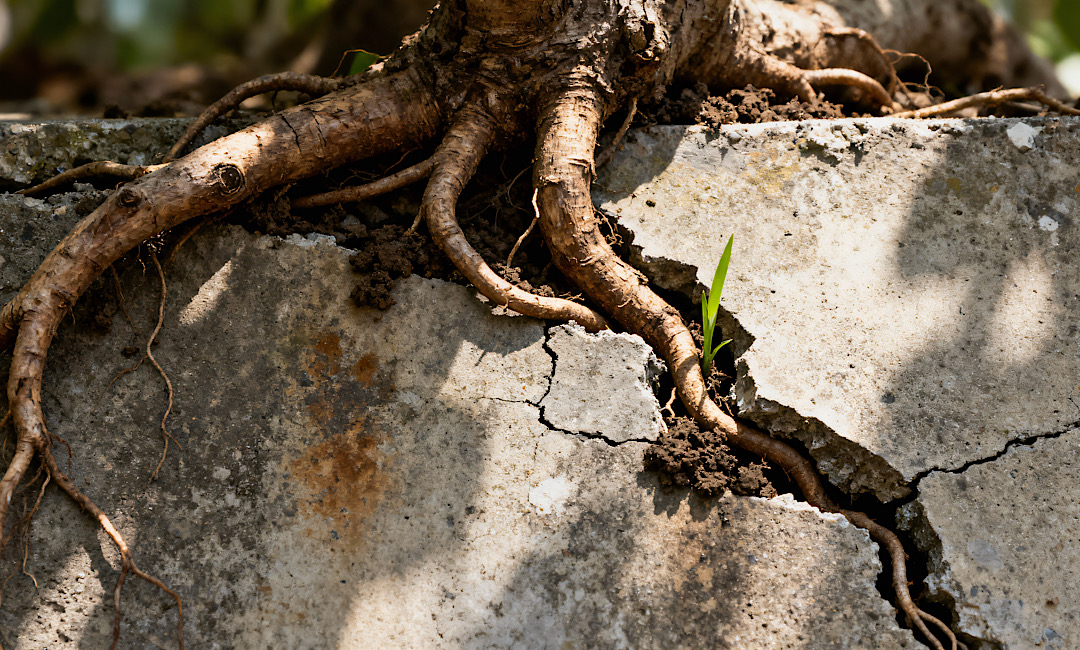
Many homeowners assume that when concrete driveways, sidewalks, or patios start to crack or lift near trees, the tree roots must be pushing the slab upward. While this explanation is common, the reality is often more complex. In many cases, tree roots do not directly lift concrete. Instead, they influence the soil conditions beneath the slab, which leads to movement, cracking, or settlement.
Understanding how tree roots actually affect concrete helps property owners make better decisions about repairs and avoid unnecessary tree removal. In many situations, the problem is not the roots themselves but the soil changes that occur around them.
By recognizing the true causes of root-related concrete movement, homeowners can address the underlying issue and restore stable surfaces without damaging healthy trees.
The Common Myth: Roots Pushing Concrete Upward
A widely held belief is that large tree roots grow beneath concrete slabs and physically push them upward as the roots expand. While this can happen in rare situations, it is not the most common cause of concrete movement.
Concrete is extremely heavy and designed to resist vertical pressure. Most tree roots grow along the path of least resistance, spreading horizontally through loose soil rather than pushing against solid objects like concrete slabs.
When slabs appear lifted or uneven near trees, the cause is often related to changes in the soil rather than the root itself applying upward force.
Understanding this distinction helps explain why concrete movement can occur even when large roots are not directly beneath the slab. Many of these issues are closely related to why concrete sinks, which often involves soil instability rather than surface pressure.
How Tree Roots Change Soil Conditions
Tree roots interact with soil in several ways that can indirectly affect nearby concrete structures.
As roots grow, they absorb large amounts of water from the surrounding soil. This process can dry out the soil beneath nearby slabs, causing it to shrink and lose volume.
When soil shrinks or settles, the concrete above may begin to shift or sink unevenly.
Roots can also alter soil density as they expand through the ground. Over time, this can create small pockets or changes in soil structure that reduce support beneath concrete surfaces.
In both cases, the movement of soil—not the roots themselves—causes the slab to crack or settle.
Soil Moisture Changes Around Trees
One of the most significant ways trees affect nearby concrete is through moisture changes in the soil.
Large trees absorb substantial amounts of water, especially during hot summer months. When soil dries out around roots, it can contract and lose its ability to support concrete slabs.
Clay soils are particularly sensitive to moisture changes. These soils expand when wet and shrink when dry.
If a tree repeatedly pulls moisture from the soil beneath a concrete surface, the ground may gradually shift or compact. This process can create uneven support beneath the slab.
Over time, these small changes can lead to visible cracks or sinking sections of concrete. These moisture-related movements are often addressed using soil stabilization techniques that reinforce the ground beneath affected slabs.
Root Growth and Soil Displacement
While roots rarely push concrete directly upward, they can still influence soil displacement around slabs.
As roots expand underground, they may move through compacted soil and slightly alter the ground structure nearby. This movement can disrupt the soil that supports concrete.
However, roots generally avoid pushing directly against concrete slabs because the pressure required to lift the slab is much greater than what roots typically generate.
Instead, roots tend to grow along slab edges, underneath loose soil areas, or around foundations where the soil is easier to penetrate.
These subtle changes in soil structure can still contribute to uneven support beneath concrete.
Why Concrete Cracks Near Trees
Concrete cracking near trees is often caused by a combination of factors related to soil stability.
Some of the most common causes include:
- Soil shrinkage due to tree root water absorption
- Soil erosion from poor drainage near trees
- Compaction changes as roots move through soil
- Seasonal moisture fluctuations in the ground
When these conditions occur, the slab may lose consistent support across its surface. Areas with weaker support begin to sink or settle, which places stress on the concrete.
As a result, cracks form to relieve that stress.
This explains why cracks often appear several feet away from the actual tree trunk.
Signs That Tree Roots Are Affecting Concrete
When trees influence nearby concrete, certain warning signs may appear.
Homeowners may notice:
- Cracks forming near sidewalks or driveways close to trees
- Uneven slabs or sinking corners near landscaped areas
- Raised sections along slab edges near roots
- Soil gaps forming beneath concrete surfaces
These signs typically indicate that soil movement is affecting the stability of the slab.
A professional evaluation can determine whether tree roots, drainage issues, or other soil conditions are contributing to the problem.
Why Cutting Tree Roots Can Create Bigger Problems
When concrete movement occurs near trees, some homeowners assume the best solution is to cut the roots causing the issue. However, removing roots can sometimes create larger problems.
Tree roots provide structural stability and help anchor the tree in the soil. Cutting major roots can weaken the tree, making it vulnerable to disease or storm damage.
Additionally, root removal does not always solve the underlying soil issue. If soil has already shifted or eroded, the concrete may continue to settle even after roots are removed.
A more effective solution often involves stabilizing the soil beneath the slab rather than removing the tree.
How Concrete Lifting Repairs Root-Related Movement
When tree roots contribute to soil instability beneath concrete, concrete lifting can often restore the slab without requiring full replacement.
Concrete lifting techniques work by injecting specialized materials beneath the slab to fill empty spaces and reinforce the soil structure.
This process helps:
- Restore the slab to its original level
- Fill voids created by soil movement
- Stabilize the ground beneath the concrete
- Prevent further settlement
Compared to removing and replacing concrete, lifting solutions are typically faster, less disruptive, and more cost-effective.
Most importantly, they allow homeowners to repair damaged concrete while preserving nearby trees.
Preventing Future Concrete Problems Near Trees
While trees naturally interact with soil, homeowners can take steps to reduce the likelihood of concrete movement near landscaping.
Preventative strategies include:
- Maintaining consistent soil moisture around large trees
- Improving drainage near concrete surfaces
- Avoiding planting large trees too close to driveways or sidewalks
- Monitoring soil erosion around landscaping features
These practices help maintain stable soil conditions that support concrete surfaces.
Proper landscaping planning also reduces long-term structural issues.
Frequently Asked Questions About Tree Roots and Concrete
Do tree roots actually push concrete upward?
In most cases, roots do not push slabs upward. Concrete movement is usually caused by soil changes beneath the slab.
Why do sidewalks often crack near trees?
Roots can alter soil moisture and density, which reduces support beneath concrete and leads to cracking.
Can cutting roots fix concrete damage?
Cutting roots may weaken the tree and does not always solve the soil stability problem, causing damage.
Can sunken concrete near trees be repaired?
Yes. Concrete lifting techniques can stabilize and restore slabs affected by soil movement around tree roots.
Should trees be removed if they affect concrete?
Not usually. Many concrete issues can be repaired without removing healthy trees.
Understanding the Real Relationship Between Trees and Concrete
Trees and concrete often coexist in residential landscapes, but their interaction is frequently misunderstood. While roots are often blamed for lifting slabs, the true cause of most concrete movement is soil instability caused by moisture changes and ground shifting around roots.
By focusing on soil stabilization rather than tree removal, homeowners can preserve their landscape while restoring safe, level concrete surfaces.
Idaho Concrete Lifting helps property owners identify the real causes of concrete settlement and implement effective solutions that stabilize slabs and protect surrounding landscapes. Understanding how soil, roots, and moisture interact is the key to long-lasting concrete repairs.