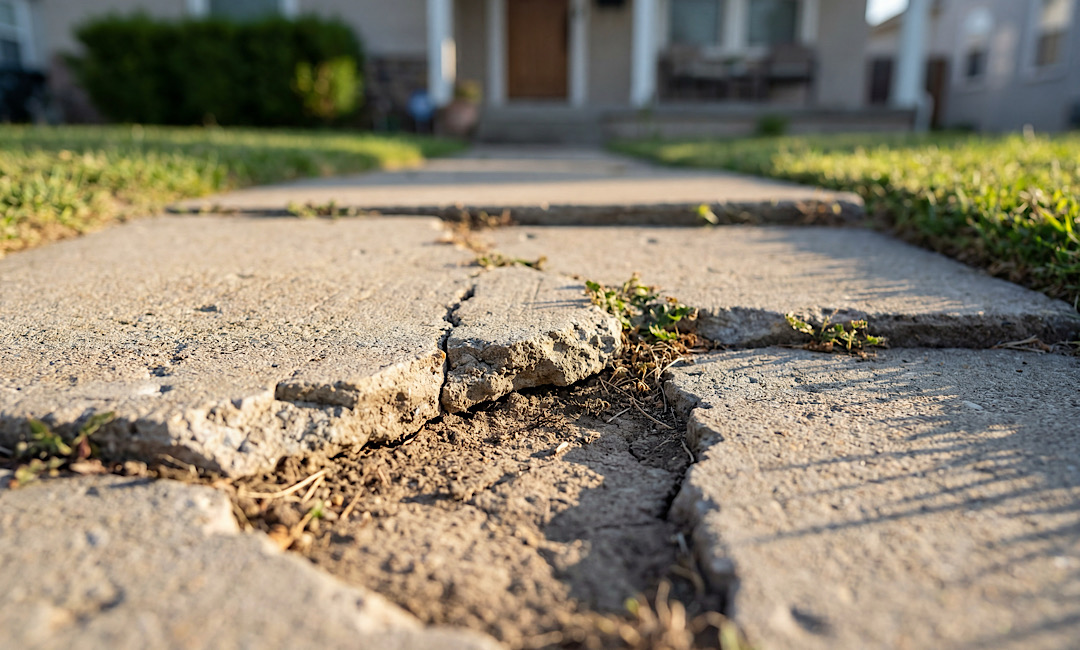
Foundation concrete is the last place most Idaho homeowners want to discover a problem, and unfortunately, it is one of the first places that settlement tends to show up. When Idaho Concrete Lifting assesses properties with concrete settlement concerns, the area immediately surrounding the foundation almost always tells part of the story. Settled sidewalks, sunken garage aprons, sloping patios, and gaps between concrete surfaces and the foundation wall are all signs that the soil conditions around the home are changing in ways that deserve attention before winter arrives.
The good news is that concrete settlement around foundations is largely preventable with the right combination of drainage management, seasonal maintenance, and timely professional attention when early warning signs appear. Understanding what drives settlement in Idaho’s specific conditions gives homeowners the tools to stay ahead of a problem that becomes significantly more expensive the longer it develops.
How Idaho’s Seasonal Conditions Drive Foundation Area Settlement
Idaho’s climate creates a specific pattern of soil movement that affects foundation area concrete more directly than in many other regions. Understanding that pattern is the starting point for effective prevention.
Southern Idaho and eastern Oregon experience pronounced wet and dry seasons. Spring brings snowmelt and rain that saturates the clay-heavy soils common throughout the region. Summer brings extended heat and drought conditions that pull moisture from those same soils, causing significant shrinkage and contraction. This seasonal cycle of expansion and contraction is the primary driver of soil movement around foundations, and the concrete surfaces closest to the foundation experience its effects most directly.
When soil contracts during the dry season, it pulls away from foundation walls and from the undersides of adjacent concrete slabs. This creates voids that allow concrete sections to drop, gaps that allow water to enter more aggressively during the next wet season, and a progressive deterioration of subgrade support that compounds with each passing year. Summer soil shifts and why your concrete might be sinking covers the dry season side of this cycle, and preventing foundation damage in spring addresses the wet season conditions that follow.
The Relationship Between Drainage and Foundation Concrete Settlement
Poor drainage is the single most influential factor in foundation area concrete settlement, and it is also the factor most directly within a homeowner’s control. Water that collects near the foundation, whether from roof runoff, irrigation overspray, or natural precipitation, does several things that accelerate settlement.
It softens the subgrade, reducing its ability to support adjacent concrete slabs and the foundation itself. It erodes fine soil particles from beneath concrete surfaces, creating voids that allow slabs to drop. And when it refreezes in winter, it expands and physically moves concrete sections, soil, and foundation components in ways that accumulate over multiple freeze-thaw cycles.
The practical drainage improvements that most directly protect foundation area concrete include extending downspouts to discharge water at least four to six feet from the foundation rather than directly at the base of the wall, ensuring that the lot grade adjacent to the foundation slopes away from the house rather than toward it, and managing irrigation systems to minimize overspray onto concrete surfaces and foundation-adjacent soil.
These are not complicated or expensive interventions, but their cumulative impact on the foundation area concrete longevity is significant. Essential foundation repair techniques in Boise, addressing unique terrain challenges covers the broader foundation protection context that drainage management fits into.
Joint Sealing as a Prevention Tool
The joints between concrete slab sections adjacent to the foundation are one of the primary pathways through which surface water reaches the subgrade and the foundation wall. Joints that have lost their sealant, developed cracks, or been damaged by freeze-thaw cycling allow water to infiltrate directly to the most vulnerable soil zone around the home.
Maintaining sealed joints in foundation-adjacent concrete, including the garage apron, front and rear walkways, and patio slabs, is one of the most cost-effective preventive maintenance steps available to homeowners. The cost of joint sealing is modest, the process is straightforward, and the protection it provides against water infiltration significantly reduces the settlement risk in the area where settlement is most consequential.
Joints should be inspected annually, ideally in late summer or early fall before the wet season begins, and resealed wherever the existing sealant has cracked, pulled away from the joint edges, or deteriorated. Cracks in the driveway and why caulking is more than just cosmetic makes the case for joint maintenance as a substantive protective measure rather than a purely cosmetic one.
Soil Moisture Management Near the Foundation
Maintaining relatively consistent soil moisture near the foundation is a strategy that many homeowners overlook, but that has a meaningful impact on settlement risk. The seasonal extremes of wet and dry that drive soil expansion and contraction are a natural feature of Idaho’s climate, but their effects can be moderated by thoughtful landscape management.
Deep, infrequent irrigation of foundation-adjacent plantings encourages root systems to develop at depth rather than drawing moisture from the shallow soil directly beneath concrete surfaces. Mulching garden beds near the foundation retains soil moisture during dry periods, reducing the degree of summer shrinkage in the soil zone most directly relevant to concrete settlement.
Conversely, avoiding overwatering in foundation-adjacent areas during wet seasons reduces the saturation peaks that soften subgrade soil and encourage erosion beneath slabs. The goal is not to eliminate all moisture variation but to moderate the extremes that drive the most significant soil movement. The importance of soil stabilization covers the broader soil management principles that support long-term concrete and foundation stability.
Recognizing Early Warning Signs Before Winter
Fall is the critical window for identifying foundation area concrete problems that developed over the summer and addressing them before winter freeze-thaw cycles drive additional movement. The warning signs to look for during a late-season inspection include the following.
Gaps between concrete surfaces and the foundation wall indicate that slabs have settled away from the structure. Even small gaps are significant because they provide a direct pathway for water to enter the soil immediately adjacent to the foundation during fall rains and snowmelt.
Visible height differences between the garage apron and the garage floor, between a front walkway and the entry step, or between patio sections and the foundation wall indicate that differential settlement has occurred. These height differences tend to increase over winter as freeze-thaw cycling continues to move settled slabs.
Cracks that run parallel to the foundation wall or that span the full width of a slab section adjacent to the foundation indicate that the slab is experiencing movement stress from changing subgrade conditions. These cracks allow water infiltration and should be sealed as a minimum step, even if lifting is not immediately undertaken.
Water pooling near the foundation after rain events or irrigation indicates that the grade has been disrupted by settlement and is no longer directing water away from the home. This is one of the most urgent conditions to address before winter because pooled water that freezes and expands adjacent to the foundation can cause damage beyond the concrete surfaces themselves. Common foundation problems cover the full range of conditions that should be on a homeowner’s inspection checklist before winter arrives.
How Professional Concrete Lifting Addresses Foundation Area Settlement
When early warning signs have progressed beyond what drainage improvements and joint sealing can address, professional concrete lifting restores settled foundation-adjacent slabs to their original grade and fills the voids beneath them that create ongoing settlement risk.
The polyurethane foam injection process used for foundation area concrete lifting is precise and controlled, which matters particularly in this location where the proximity to the foundation wall requires careful management of injection pressure and foam expansion. An experienced technician understands how to lift settled slabs adjacent to foundation walls without exerting unintended pressure against the foundation itself.
Lifting foundation-adjacent concrete also restores the grade relationship between the concrete surface and the foundation wall, which is essential for directing water away from the home rather than toward it. A settled patio or walkway that slopes toward the foundation is actively channeling water to the worst possible location. Restoring its original outward slope through lifting directly improves the drainage condition at the foundation perimeter. Residential foundation repair covers the full range of foundation area conditions that professional assessment and repair address.
What Homeowners Can Do Right Now
With fall approaching, a practical inspection and preparation checklist helps Idaho homeowners identify and address foundation area concrete conditions before winter makes them worse.
Walk the perimeter of your home and note any gaps between concrete surfaces and the foundation wall. Check the garage apron transition for height differences between the apron and the garage floor. Assess the slope of all concrete surfaces adjacent to the home and identify any areas where water would pool rather than drain away. Check joint sealant condition on all foundation-adjacent concrete surfaces and plan to reseal any joints that have deteriorated. And if any surfaces sound hollow when tapped or feel unstable underfoot, schedule a professional assessment before freeze-thaw season begins.
The window between late summer and the first hard freeze is the ideal time for both preventive maintenance and professional repair. How to protect your concrete surfaces before winter provides a broader pre-winter preparation framework that complements the foundation-specific steps covered here.
Frequently Asked Questions About Preventing Concrete Settlement Around Foundations
How do I know if the concrete settlement near my foundation is a serious problem or just cosmetic?
Settlement that has created gaps between concrete and the foundation wall, that has disrupted the grade so water drains toward the home, or that has produced visible height differences of more than a quarter inch between adjacent sections, warrants professional assessment. These conditions have functional implications for water management at the foundation perimeter that go beyond cosmetic concerns. A settlement that is minor and has not disrupted drainage or created gaps may be monitored through seasonal inspections, but a professional opinion on which category your situation falls into is worthwhile if you are uncertain.
Can I prevent concrete settlement around my foundation by controlling irrigation?
Irrigation management is one of the most effective preventive measures available. Avoiding overwatering in foundation-adjacent areas, directing irrigation away from concrete slab edges and joints, and using deep infrequent watering rather than frequent shallow irrigation all reduce the soil moisture extremes that drive settlement. Combined with downspout management and joint sealing, irrigation control gives homeowners meaningful influence over the conditions that most directly drive foundation area settlement in Idaho’s climate.
Is it safe to have concrete lifted directly adjacent to my foundation wall?
Yes, when performed by an experienced professional who understands the proximity considerations involved. Polyurethane foam injection near foundation walls requires careful control of injection pressure and foam volume to raise the adjacent slab without exerting unintended lateral pressure against the foundation. An experienced technician manages this through careful injection sequencing and monitoring. Professional assessment before any lifting work adjacent to foundation walls ensures the approach is appropriate for the specific conditions present.
Should I address drainage issues before or after having concrete lifted?
Ideally, both should be addressed together or in close sequence. Lifting settled concrete restores the grade relationship that allows water to drain away from the foundation, which is itself a drainage improvement. Correcting downspout discharge, regrading soil adjacent to the foundation, and sealing joints after lifting ensures that the repaired surface is not immediately re-exposed to the water infiltration conditions that contributed to the original settlement. Addressing lifting without the accompanying drainage improvements reduces the longevity of the repair.
How often should I inspect the foundation area concrete for settlement?
A twice-annual inspection is a reasonable baseline for most Idaho homeowners. A spring inspection after snowmelt and the wet season identifies damage and settlement that developed over winter. A late summer or early fall inspection identifies the settlement driven by the dry season’s soil contraction, which is when the most significant subgrade changes typically occur. Homes with known drainage challenges or clay-heavy soils adjacent to the foundation may benefit from more frequent monitoring. Signs of foundation damage every homeowner should know is a useful reference for what to look for during these inspections.
What is the best time of year to have foundation area concrete lifted in Idaho?
Late summer through early fall is the ideal window for foundation area concrete lifting in Idaho. Dry season soil conditions make voids and settlement patterns most accurately identifiable, and completing repairs before fall rains and freeze-thaw cycling begin ensures the repaired surface enters winter in a stable, supported condition. Spring is the second-best window once the ground has thawed and dried sufficiently for accurate assessment and foam injection. Winter lifting is possible in mild conditions, but is generally less predictable due to frozen ground and temperature effects on foam performance.
Protect Your Foundation Before Winter Gets Here
The concrete surrounding your foundation is your home’s first line of defense against water at the most critical location on the property. Contact Idaho Concrete Lifting to schedule a free assessment of your foundation area concrete before fall rains and freeze-thaw cycles turn a manageable situation into a more significant problem.