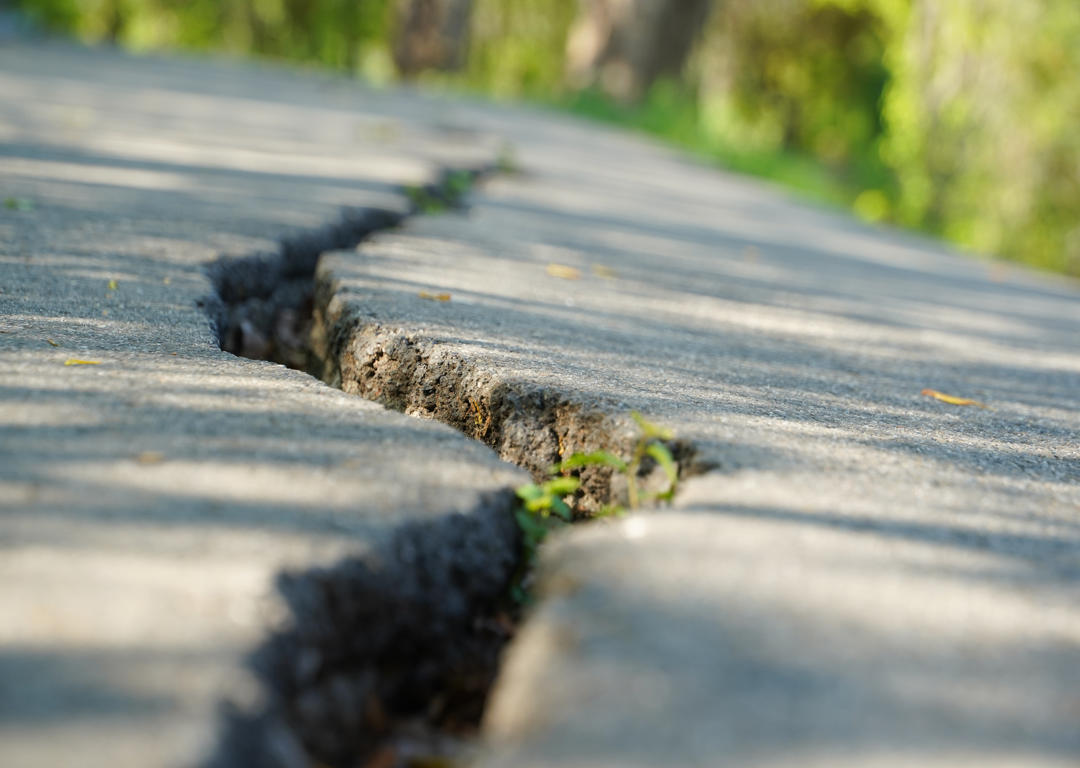
A sunken patio or uneven sidewalk has a way of becoming background noise around the house. It starts as something you notice, then becomes something you warn guests about, and eventually becomes something you have simply learned to step around without thinking. When Idaho Concrete Lifting talks with homeowners about patio and sidewalk settlement, the most common reaction after seeing what the repair process actually involves is some version of: ” Why did I wait so long?
The answer is usually that homeowners assumed fixing it meant tearing it out and starting over. The mess, the cost, the time, and the disruption of a full concrete replacement are enough to push the decision off indefinitely. The reality is that most uneven patios and sidewalks can be restored to their original level quickly, cleanly, and at a cost that makes the decision easy rather than difficult.
Why Patios and Sidewalks Sink
Patio and sidewalk slabs sink for the same fundamental reason that any concrete surface settles: the soil beneath them loses the density and stability needed to support the slab above. In Idaho’s climate, this process is driven by a specific combination of conditions that affect residential concrete throughout the region.
Seasonal soil movement is the primary factor. The clay-rich soils common across southern Idaho and eastern Oregon absorb moisture and expand during wet seasons, then dry out and contract significantly during the hot summer months. Each cycle of expansion and contraction shifts the soil slightly, and over several years, these small movements accumulate into voids beneath concrete slabs that allow sections to drop.
Patio slabs are particularly vulnerable because they are often surrounded by landscaping and irrigation systems that introduce water into the soil adjacent to and beneath the slab. Irrigation water that migrates beneath a patio slab softens the subgrade, and when the dry season follows, the saturated soil contracts more dramatically than soil that maintained more consistent moisture. The result is accelerated void formation beneath patios in landscaped settings.
Sidewalks face their own specific challenges. Tree roots growing beneath sidewalk sections lift some areas while simultaneously drawing moisture from the soil under adjacent sections, creating uneven settlement patterns. Downspout discharge directed onto or adjacent to sidewalks concentrates water at specific points, softening the subgrade locally and creating differential settlement between sections. Spring soil shifts and how Idaho weather affects concrete covers the seasonal dynamics that drive patio and sidewalk settlement throughout the year.
The Tripping Hazard Problem
Uneven patio and sidewalk concrete is one of the most common sources of residential trip and fall injuries, and the height differences that create these hazards are often smaller than homeowners expect. A lip of three-quarters of an inch between adjacent slab sections is enough to catch a foot, particularly for older adults, children, and anyone not paying close attention to the surface they are walking on.
For homeowners who regularly host family gatherings, neighborhood events, or have elderly relatives visiting, an uneven patio or sidewalk is a genuine safety concern that creates both personal and potential liability exposure. A guest injured on a known hazardous condition on your property creates a premises liability situation that most homeowners would strongly prefer to avoid.
Addressing the hazard through concrete lifting eliminates the risk cleanly and permanently rather than leaving a surface that requires ongoing verbal warnings or physical barriers to manage safely. Signs of foundation damage every homeowner should know extends the inspection framework to the broader property and helps homeowners identify related conditions that may be developing alongside patio and sidewalk settlement.
What Concrete Lifting Actually Involves for Patios and Sidewalks
For homeowners who picture concrete repair as a noisy, messy, multi-day project, the actual process of polyurethane foam concrete lifting is often a pleasant surprise. The process is minimally invasive by design, and for a typical residential patio or sidewalk, the work is completed in a few hours with minimal disruption to the surrounding landscape or daily routine.
The technician begins by assessing the settled areas, identifying the settlement pattern, and determining the optimal injection locations. Small holes, roughly the diameter of a dime, are drilled through the slab at the identified locations. These are the only penetrations made in the concrete during the entire process.
Two-part polyurethane foam is injected through ports inserted into the holes. The foam expands beneath the slab, fills the voids in the subgrade, and exerts upward pressure that raises the slab gradually to its original level. The technician monitors the lift carefully and stops injection when the correct elevation is achieved. The foam cures within minutes, the ports are removed, and the small holes are patched with a cement-based filler.
For a standard residential patio or sidewalk, the homeowner is typically left with a level surface, small patched holes that blend into the concrete over time, and normal use of the area within hours of the technician’s departure. The surrounding landscaping is undisturbed, the slab itself is intact, and there is no concrete debris to dispose of. The benefits of polymer concrete lifting covers the material and process advantages of polyurethane foam in detail.
The Cost Comparison: Lifting vs. Replacement for Patios and Sidewalks
Full replacement of a settled patio or sidewalk section involves breaking out the existing concrete, disposing of the debris, re-preparing the subgrade, forming and pouring new concrete, and waiting the full cure period before the surface can be used. For a typical residential patio, this process costs substantially more than lifting and leaves the homeowner without their outdoor living space for days.
Polyurethane concrete lifting for a patio or sidewalk typically costs significantly less than replacement, often by fifty percent or more for equivalent surface area. The cost advantage is even more pronounced when indirect costs are considered. Replacement generates concrete debris that must be removed and disposed of. It requires landscaping adjacent to the slab to be disturbed and restored. And it delivers a new slab sitting on the same subgrade conditions that caused the original slab to settle, without specifically addressing the void formation and soil instability beneath it.
Lifting, by contrast, addresses the subgrade directly, restores the original slab, and is completed in a fraction of the time at a fraction of the cost. For most homeowners evaluating the two options side by side, the decision is straightforward. How to fix cracked driveways without replacing concrete makes a parallel case for repair over replacement that applies equally to patios and sidewalks.
Curb Appeal and Property Value
Beyond the safety and cost considerations, uneven patios and sidewalks have a measurable impact on how a property looks and how it is perceived by visitors and potential buyers. A sunken patio makes an outdoor living space feel neglected, regardless of how well the rest of the property is maintained. An uneven front walkway creates a first impression that is hard to separate from the broader perception of how the home has been cared for.
For homeowners thinking about selling, the concrete condition is one of the items that appears on inspection reports and affects buyer perception of overall property condition. Addressing patio and sidewalk settlement before listing is a relatively modest investment that removes a visible deficiency and contributes to a more favorable first impression. Boosting curb appeal before you sell by fixing sunken concrete addresses the resale value dimension of concrete repair, specifically for homeowners preparing to list their property.
For homeowners not planning to sell, a level patio simply makes outdoor living more enjoyable. Furniture sits evenly, water drains properly rather than pooling beneath chairs and tables, and the space feels finished and well-maintained rather than something that needs to be apologized for.
When Lifting Is the Right Choice and When Replacement Makes More Sense
Polyurethane concrete lifting is the right choice for most patio and sidewalk settlement situations where the concrete slab itself is structurally sound. The key question is whether the slab can be returned to a functional and safe condition through lifting, or whether the concrete has deteriorated to the point where replacement is the only path to a durable result.
Lifting is appropriate when settlement is the primary problem, when cracks are present, but the slab sections remain intact, when the concrete surface is in reasonable condition aside from the settlement, and when the homeowner wants to preserve the existing slab rather than replace it.
Replacement makes more sense when slab sections have broken into multiple pieces, when the concrete surface has severely spalled or deteriorated, or when the configuration of the patio or walkway needs to change significantly. In many cases, a combination approach makes sense, lifting the sections that are candidates for repair and replacing only those that have deteriorated beyond repair. A professional assessment determines the right approach for each specific situation. DIY gone wrong and when to call a concrete expert addresses the broader question of when professional assessment and repair is the appropriate response versus homeowner-managed maintenance.
Frequently Asked Questions About Concrete Lifting for Patios and Sidewalks
How long does patio or sidewalk concrete lifting take?
Most residential patio and sidewalk lifting projects are completed in a few hours, depending on the number of sections involved and the extent of the settlement. The polyurethane foam cures rapidly after injection, and the surface is typically ready for normal foot traffic within an hour or two of completion. Outdoor furniture can usually be returned to the patio the same day.
Will the lifted sections match the height of the surrounding concrete perfectly?
The goal of concrete lifting is to restore settled sections to their original grade, aligning them with adjacent sections and eliminating the height differences that created the uneven surface. In most cases the result is a smooth, even surface that eliminates the tripping hazard and restores proper drainage. In situations where adjacent sections have also experienced some settlement, a comprehensive assessment will identify all sections requiring attention so the entire surface is addressed consistently.
Does concrete lifting disturb the landscaping around my patio?
Polyurethane foam lifting is minimally invasive and does not require excavation or disturbance of the soil and landscaping adjacent to the slab. The small drill holes are made through the concrete surface, and the foam is injected entirely beneath the slab without affecting surrounding landscape beds, plants, or hardscape elements. This is one of the most significant practical advantages of lifting over replacement for patios surrounded by established landscaping.
Can lifting fix a patio that has both sunken sections and surface cracks?
Yes. Lifting addresses the subgrade settlement that caused the slab to drop and, in most cases, also caused the structural cracks to develop. Once the slab is restored to its original level and the subgrade is stabilized, existing cracks can be cleaned and sealed to prevent water infiltration. The combination of lifting and crack sealing restores both the function and the weather resistance of the patio surface. Crack joint caulking, as a follow-up to lifting, is a recommended maintenance step.
Is concrete lifting appropriate for all types of patio surfaces?
Polyurethane foam lifting is suitable for standard poured concrete patio slabs, which are the most common residential patio surface in Idaho. Concrete pavers, flagstone, and other non-slab surfaces are not candidates for this process. For mixed surfaces where a concrete slab underlies pavers or other decorative finishes, a professional assessment will determine whether lifting is appropriate and what effect the process would have on the finished surface.
How do I know if my sidewalk needs lifting or just crack filling?
If your sidewalk has visible height differences between sections, water pooling in low spots, or sections that feel hollow or unstable underfoot, lifting is needed to address the underlying settlement. Crack filling alone is a surface treatment that does not restore subgrade support or correct unevenness. If cracks are present but all sections remain at the same level, and the surface feels solid, sealing may be sufficient for the time being. When in doubt, a professional assessment provides a definitive answer. Top signs your concrete needs lifting or repair is a useful reference for identifying which conditions warrant a professional evaluation.
Stop Stepping Around It and Fix It for Good
A settled patio or uneven sidewalk is one of those home maintenance items that feels bigger than it is until you actually address it. Contact Idaho Concrete Lifting to schedule a free assessment and find out how quickly and affordably your outdoor concrete can be brought back to level.